
Family-Friendly Coffee Tours in Guatemala
A family Guatemala coffee farm tour is an interactive, educational journey that covers the entire "seed-to-cup" process, taking place in regions like Antigua, Huehuetenango, Cobán, or around Lake Atitlán. Families visit working farms to see nurseries, harvest ripe cherries, and learn about pulping, fermentation, and roasting. Guides customize the experience for children through engaging activities such as touching seedlings, tasting coffee, and observing processing systems.
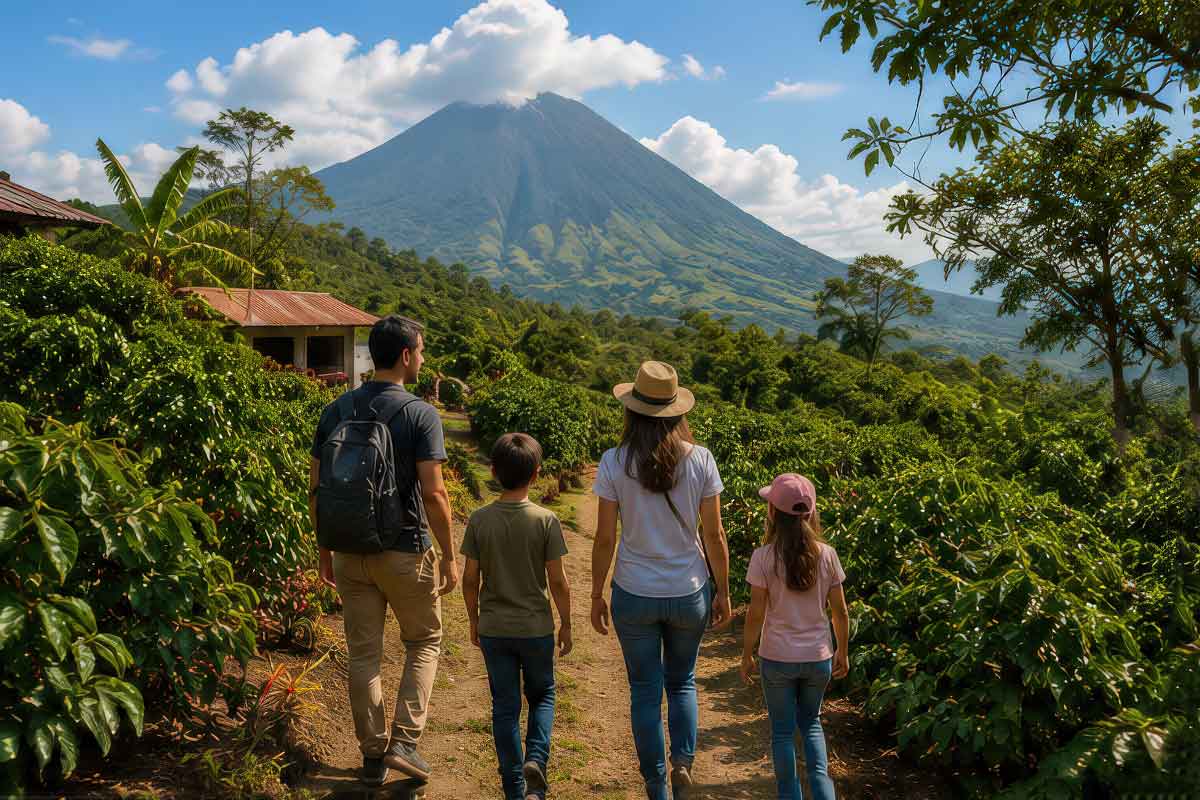
What will kids and adults learn on the farm?

You're not going to a lecture. You're going to watch a working system breathe, with all the little decisions that make a cup taste clean, or taste like regret. A good farm visit gets your family close enough to the work that your kids stop thinking coffee appears by magic in a bag, and you stop pretending processing is "just washing."
Most tours that are truly family-ready tend to cover four things, in a way each age can grab onto without melting down:
- How a coffee tree gets started (varieties, nurseries, shade, pests, why altitude matters).
- What harvest actually looks like (selective picking, defects, what "ripe" means in real time).
- How processing changes flavor (pulping, fermentation, washing, drying, moisture targets).
- Why roasting and tasting are not just for nerds (basic sensory, grind size, extraction, and yes, the fun part, drinking it).
If you want a deeper background before you land, the regional profile breakdowns on Guatemalan Coffees' regions and profiles help you connect the dots between geography and flavor, so the farm day feels less like trivia and more like pattern recognition.
Plant varieties and nursery work
On the ground, you'll hear "Arabica" a lot, but the details are where it gets interesting, especially for teenagers who secretly like systems. Guatemala farms commonly grow varieties such as Caturra, Catuaí, Pache (Común and Colís), Pacamara, and rust-resistant hybrids that emerged after coffee leaf rust hit the industry hard. You'll see nurseries with tiny plants in bags, often under shade cloth, and you'll learn why "shade-grown" is not a cute label; it's a whole agroforestry strategy. Guatemalan Coffees even notes that the vast majority of national production is shade-grown, with real implications for watersheds and habitat when done well. You can dig into that on their social and environmental impact pages.
Your kids will remember the tactile parts: the feel of the soil, the sticky sap, the way the trees sit on slopes that look like they were designed to punish knees. You'll remember the management talk. Pruning cycles. Renovation. The constant chess match with roya (coffee leaf rust). World Coffee Research puts the scale in perspective, highlighting the country's enormous tree count and the pressure to renew it in its Guatemala country profile.
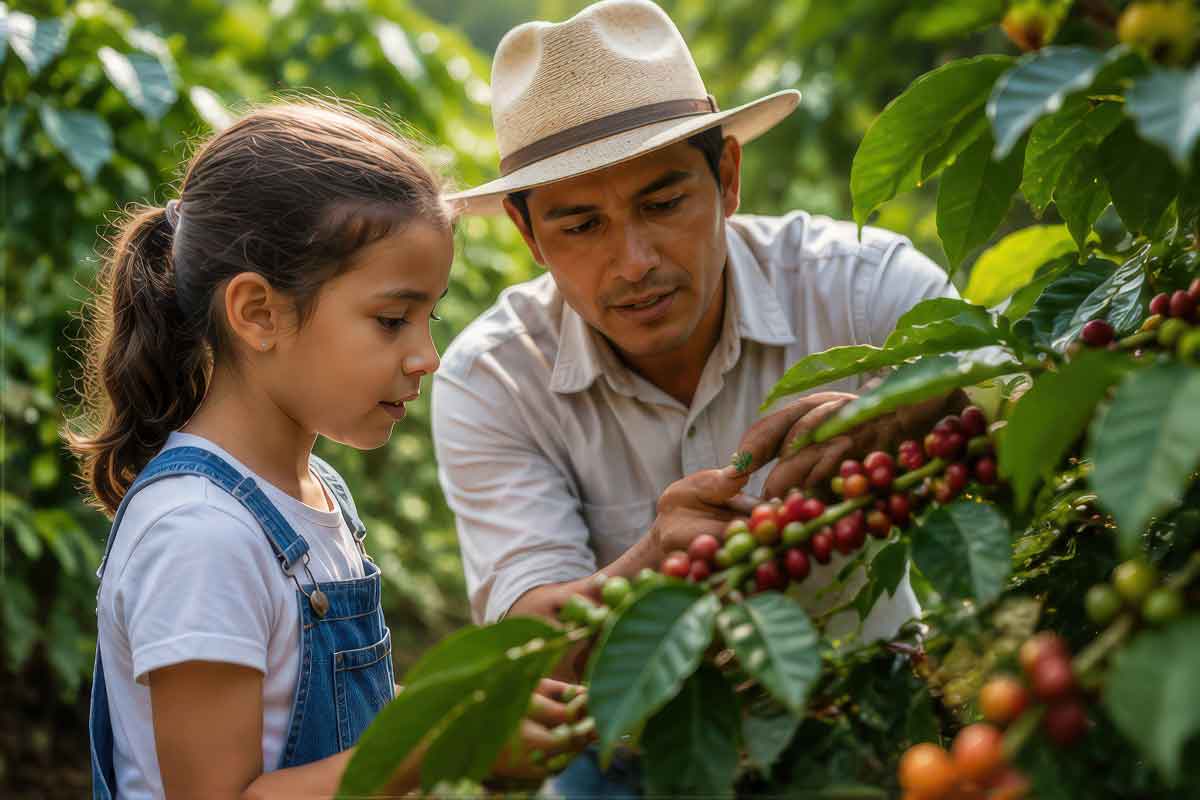
Harvest, pulping, fermentation, drying
Harvest is where the "family-friendly" label either holds up or collapses. If it's harvest season, kids can pick a few ripe cherries and feel like they contributed, while you learn why selective picking costs more and why it's worth it if you care about clean sweetness. Then comes pulping, the mechanical stripping of fruit off seed, and suddenly your kid who "hates science" is staring into a sticky channel, asking questions about mucilage.
Fermentation is where a good guide, maybe someone like German or Nancy, translates farmer talk into plain Spanish and English, and turns the farm into a living lab. You'll hear time ranges (say, 12 to 48 hours depending on temperature and method), you'll see tanks or covered bins, you'll smell that sweet-sour shift that tells you microbes are doing their thing. Drying is the unglamorous hero. Patios, raised beds, turning schedules, and the obsession with hitting stable moisture so the lot doesn't fade or go funky in storage.
If your teen is into "proof," this is also where you can start asking for processing parameters per lot, not as an interrogation, but because it's the difference between a story and a repeatable result.
Roasting, grinding, tasting
Roasting demos can be simple and still legit. You don't need a fancy sample roaster to teach heat, first crack, and development time. You do need someone who explains why lighter roasts can show acidity and florals, while darker roasts can bury a farm's work under smoke.
Grinding and tasting are where families bond, weirdly enough. Kids can do smell tests, adults can talk about texture, and everyone can learn what "clean cup" means without pretending you're in a lab. A great guide will also gently point out defects, so you're not just sipping "delicious coffee"; you're learning how quality control actually feels in your mouth.
Choose the option that best fits your family.

Families get sold the fantasy: "support local farmers directly," "buy direct," "authentic." Sometimes it's true. Sometimes it's theatre with a cute apron.
I'm skeptical of "direct" as an automatic win, because the money trail matters more than the vibe. A farm can charm you with a gorgeous view of Volcán de Agua, then get vague when you ask how pricing is set, what quality incentives exist, and whether the coffee farmer is carrying all the risk. If you're the type who likes receipts, you'll appreciate this deeper route write-up from PlanViaja's coffee immersion guide that leans into process and place rather than just the photo op.
Best ages for hands-on steps
For younger kids (say 5 to 9), the win is short, sensory, and safe: nursery seedlings, a few cherries, a quick pulping demo, a snack, then done. Ages 10 to 13 can handle more sequence, especially if they can "own" a step like turning beans on a drying patio. Teens usually love the fermentation talk and the tasting, partly because it feels grown-up, partly because it's genuinely nerdy in a good way.
If you're traveling multigenerationally, the pacing tips in Guatemala and Belize multigenerational family travel line up well with coffee regions, because the same rule applies everywhere: stamina is your real itinerary.
Private, small-group, cooperative models
Private experiences are calmer with kids because you can stop for bathroom breaks, slow down, and ask questions without feeling like you're holding strangers hostage. Small-group options can be fine if the guide is good at crowd control and the route isn't a long tour with endless standing around.
Cooperative and community-run models can be amazing for education, because you'll hear more perspectives than one finca's version of reality. Travelers often rave about how intimate and educational these visits feel, and the reviews for De La Gente's family-based tours capture that mix of warmth plus real on-the-ground detail.
For booking, this is where a seasoned DMC earns its keep. If you want someone who can stitch together coffee, culture, and nature without you turning your vacation into dust, that's where Martsam Travel tends to make sense, because they'll adjust the pacing, transport, and guide style around your kids instead of forcing them to adjust to a template.
Antigua, Huehuetenango, Cobán differences
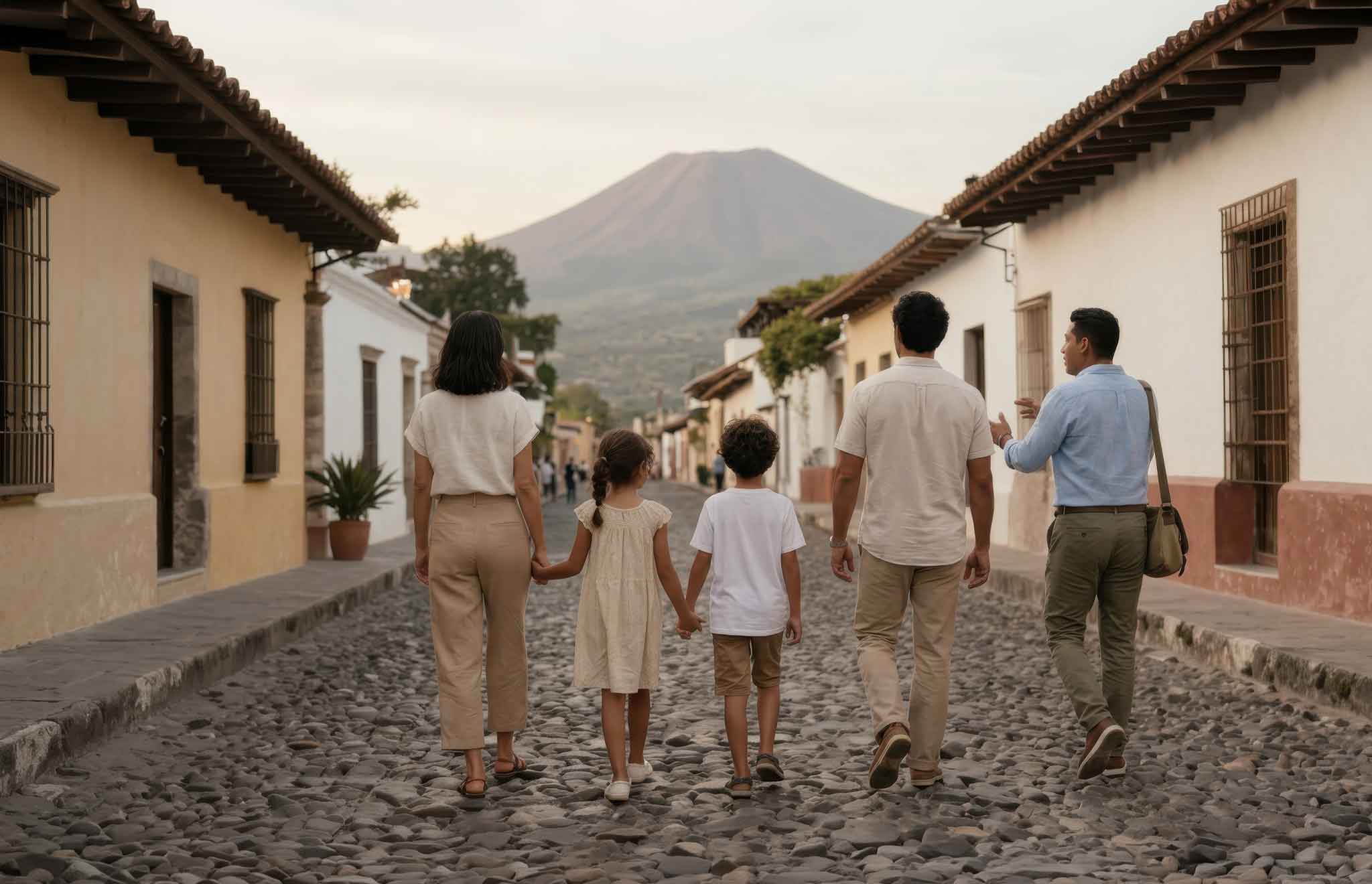
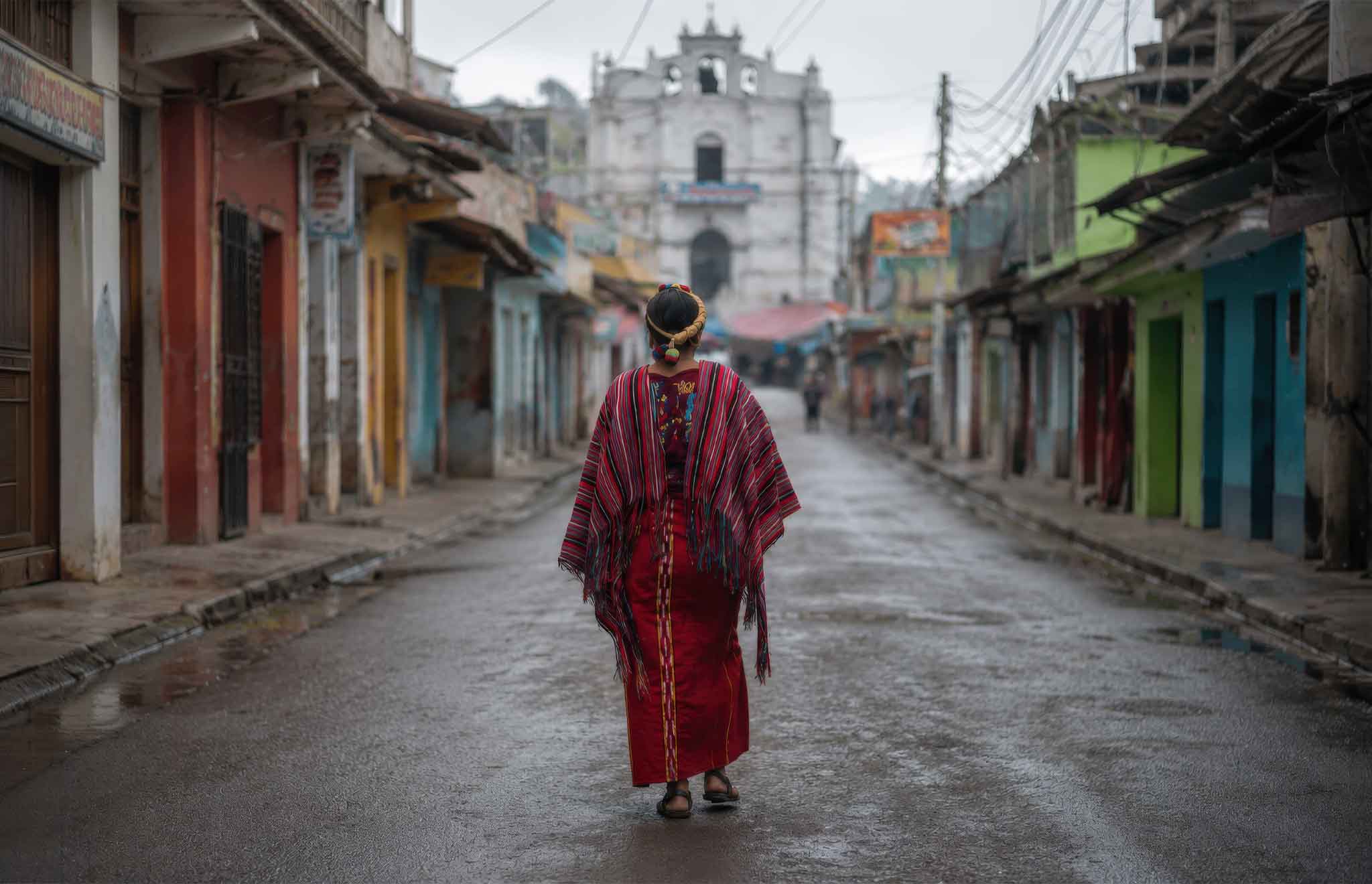
Antigua is the easy on-ramp. It's walkable, tourist-ready, and you can do a farm day without relocating your whole life. Huehuetenango is more highland and production-oriented, with a serious coffee identity, but it requires more logistics and time. Cobán leans misty, greener, cloud-forest energy, and the cultural texture can feel less staged if you're willing to go slower and accept damp shoes.
Here's the clean comparison most families actually need before they commit:
| Region base | What it feels like | Best for families who want | Watch-outs | Typical length |
|---|---|---|---|---|
| Antigua | Colonial streets, quick access to farms, cafés, and museums | First-time visitors, shorter day tour options, and easy transport | Crowds in peak season, higher prices | Half-day (2.5 to 4 hours) |
| Huehuetenango highlands | Remote, high-elevation, production-forward farms | Teens, coffee business curiosity, deeper sourcing talk | Longer drives, fewer tourist services | Full-day (6 to 8 hours, including travel) |
| Cobán area | Cloud-forest, rain, lush shade systems | Nature lovers, birding, and a softer pace | Weather shifts, humidity, road time | Full-day (6 hours or longer) |
Coffee Experiences in Guatemala Beyond Harvest Season
While many travelers associate coffee tours with harvest season, Guatemala offers meaningful coffee experiences year-round. One excellent example is Finca La Azotea, located near Antigua. Even outside the harvest months, visitors can walk through the coffee plantations, learn about cultivation techniques, visit the coffee museum, and enjoy the estate's cultural atmosphere. The experience goes beyond coffee tasting, making it an enjoyable activity year-round for families, coffee lovers, and cultural travelers.
For visitors seeking a more authentic, community-centered experience, Martsam Travel organizes sustainable coffee tours in partnership with a community project in San Miguel Escobar, a village on the slopes of Agua Volcano. This hands-on experience allows participants to actively engage in the coffee-making process from start to finish while learning directly from local families.
Guests visit a small locally owned farm where coffee is cultivated organically under shade-grown systems that help preserve biodiversity and traditional agricultural practices. Community members demonstrate how coffee is processed using ancestral tools and techniques passed down through generations. Rather than simply observing, participants are encouraged to take part in the different stages of production, creating a more immersive and educational connection to Guatemala's coffee culture.
These experiences also highlight the importance of sustainable tourism by directly supporting local families and preserving community traditions. Combined with Guatemala's volcanic landscapes and rich coffee heritage, they offer travelers a deeper understanding of the people and ecosystems behind every cup.
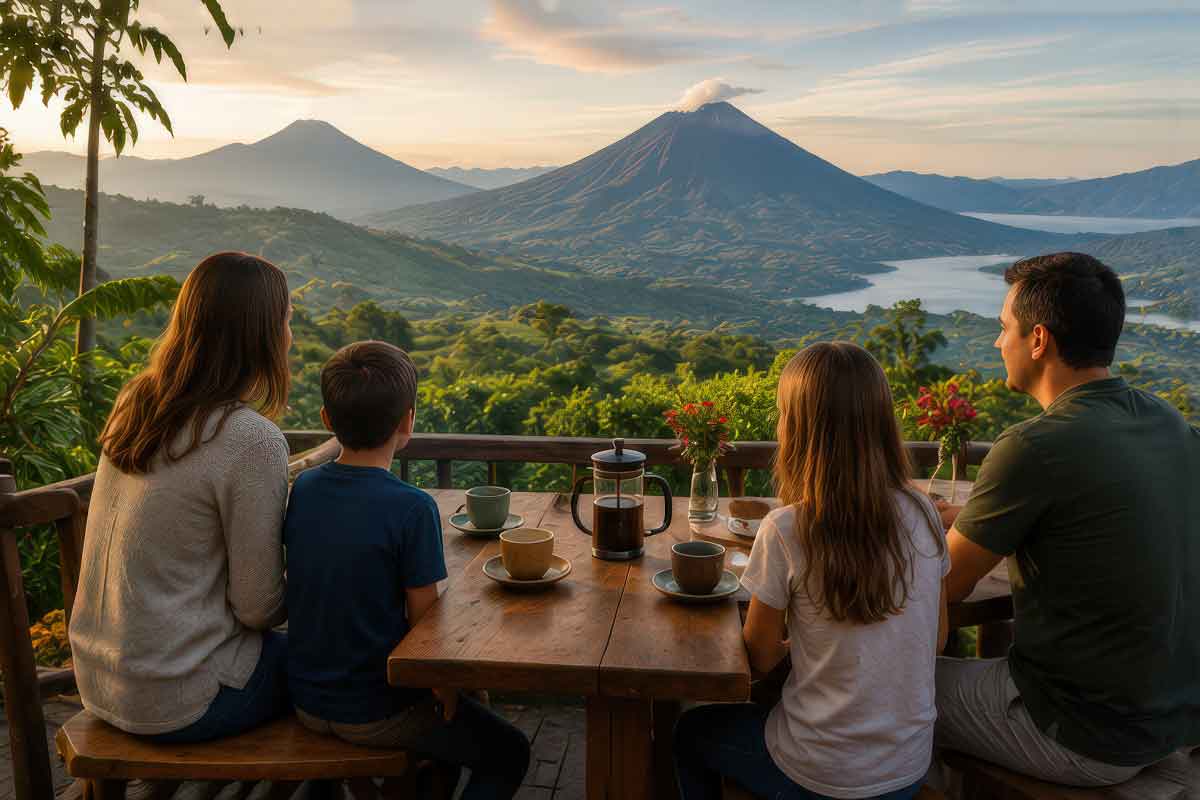
Follow a simple day-by-day itinerary.

Day 1: Antigua base and easy walking tour
Use Antigua as your base, especially if you're flying into Guatemala City and don't want to stack long transfers on day one. Antigua sits at about 1,500 m, so you'll feel the altitude a little, but it's manageable if you hydrate and don't sprint up stairs like you're proving something.
Walk the colonial grid around Central Park, duck into a coffee shop for a calm first tasting, and keep it simple. If you're in town during Semana Santa, the sawdust carpets are unreal, and also chaotic, so plan like a parent, not like a backpacker. For a low-effort nature break, El Pilar is close and gentle, which pairs nicely with the birding ideas in Guatemala's best birdwatching destinations.
Sleep somewhere you can actually rest. If you're the type who likes a known hotel, something like Antigua Hotel Posada San Vicente (yes, that one) can keep logistics boring, which is a compliment when you have kids.
Day 2: Farm day plus seed-to-cup workshop
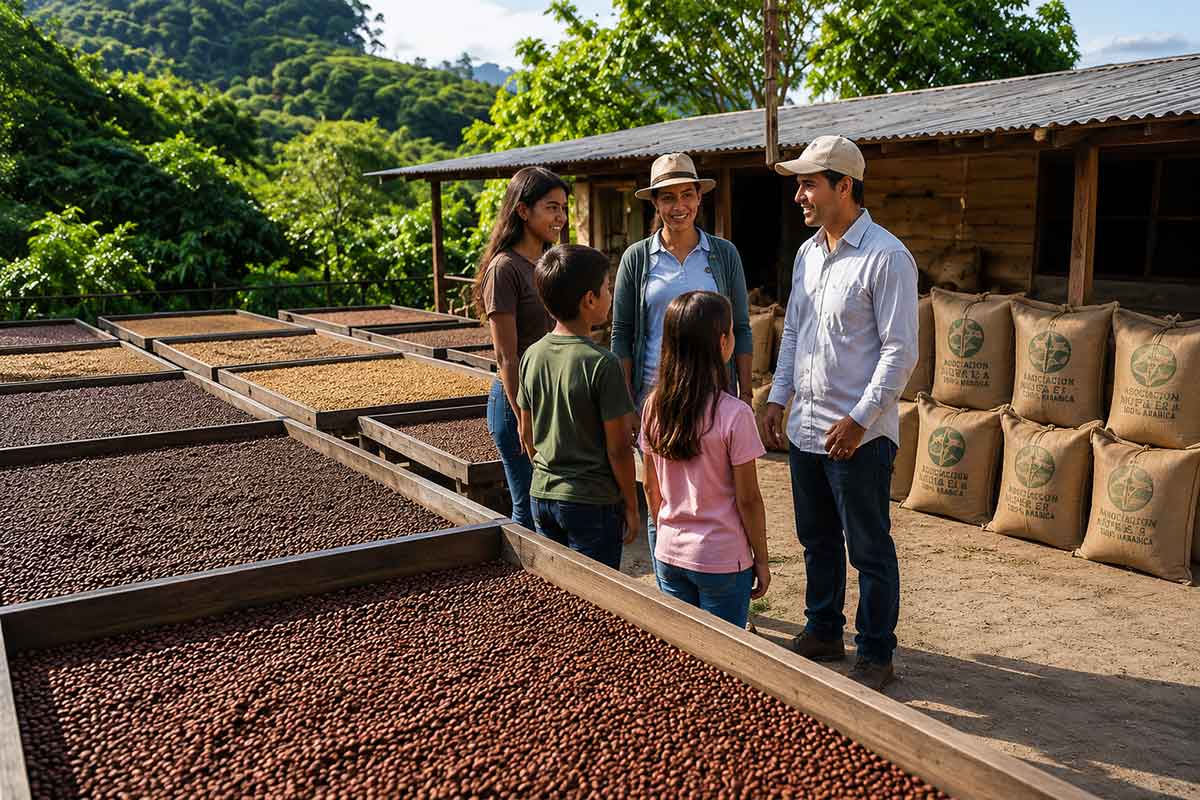
This is your main day for the coffee farm tour. You're aiming for a place that lets you see the full cycle without dragging you across unsafe terrain. Expect a drive out of Antigua, a welcome from the family or coop staff, then a structured walk: nursery, plots, harvest talk, processing area, drying patios, storage, then a roast and tasting workshop.
If you get a guide with the right energy, maybe a Maynor type who can explain fermentation without sounding like a textbook, your kids will stay engaged because they can connect actions to outcomes. "We turned the beans more often" becomes "it tastes cleaner." That is the whole game.
If you're curious about how big the sector is beyond the farm gate, the USDA's annual coffee report is a nerdy but useful reminder that this is a national export engine, not a boutique side hustle.
#image_title
Day 3: Market, weaving, and cooking add-on
Day three is your culture day, because kids need variety, and frankly, so do you. Pick a market day that makes sense for your route. Chichicastenango is the famous one, but there are plenty of local markets that feel more intimate if you're not chasing the postcard.
Pair the market with weaving, maybe in a place like San Antonio Aguas Calientes, where you can see textiles as real labor, not souvenir wallpaper. Then do a cooking class that respects allergies and picky eaters and ties back to what you're tasting in the cup. If you want the cultural side to feel personal rather than packaged, the pacing of private cultural tours in Guatemala is the right vibe.
Add nature without exhausting younger kids.

Pacaya volcano options by stamina
Pacaya is the "I hiked a volcano" option that doesn't require you to be an elite athlete, but it still demands respect. If your kids are small, consider shorter segments and don't get seduced by summit bragging rights. Horses are sometimes available for part of the route, and yes, some parents judge that. Let them. You're trying to keep your trip fun, not prove moral purity.
Birding and cloud-forest alternatives
If you'd rather skip the volcano and keep legs fresh, birding walks near Antigua, like El Pilar, are a clean win, and the Cobán zone takes it further, with cloud-forest energy that feels like a different country. Families with teens who get bored easily tend to like birding more than they expect, because it becomes a scavenger hunt with actual stakes.
Lake Atitlán village pairings
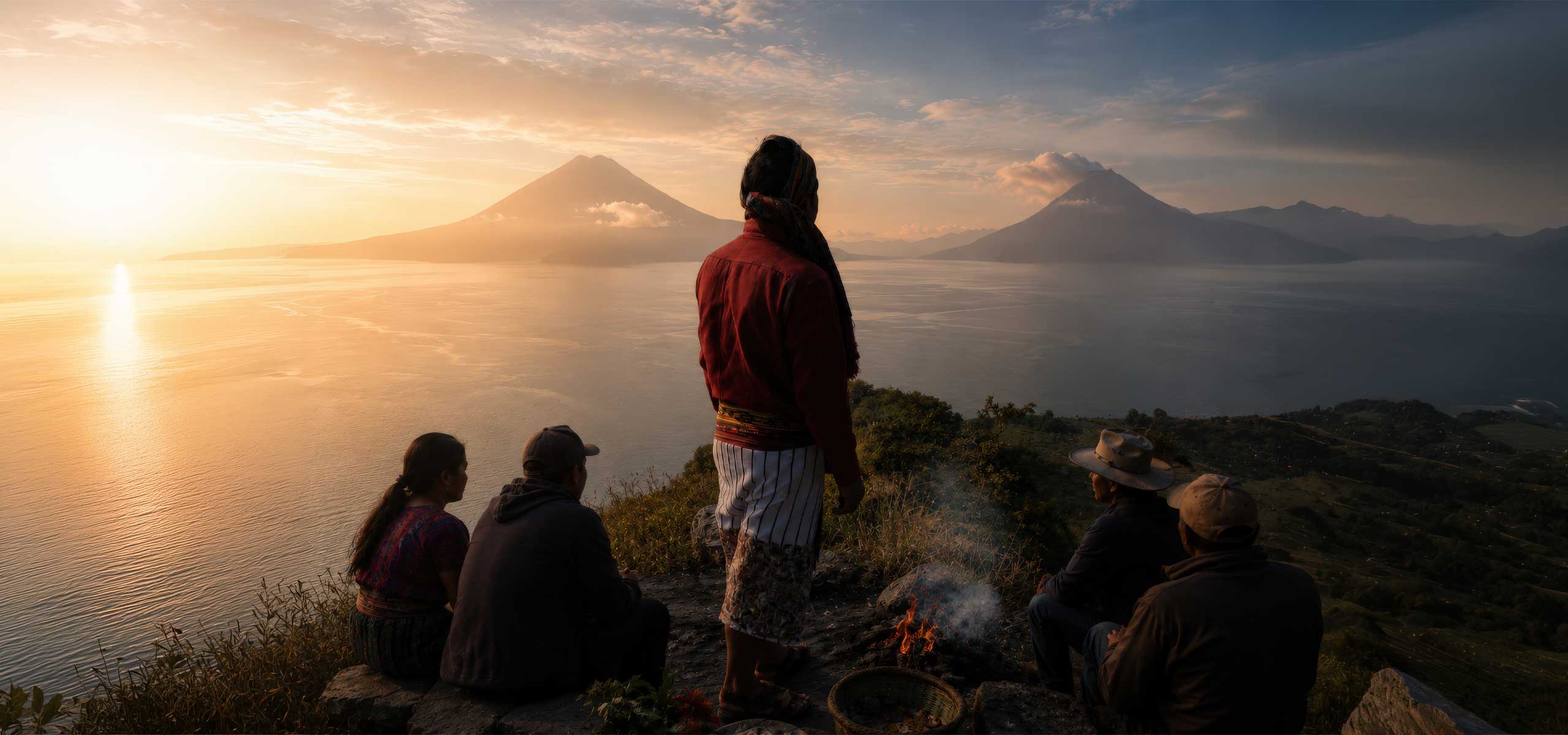
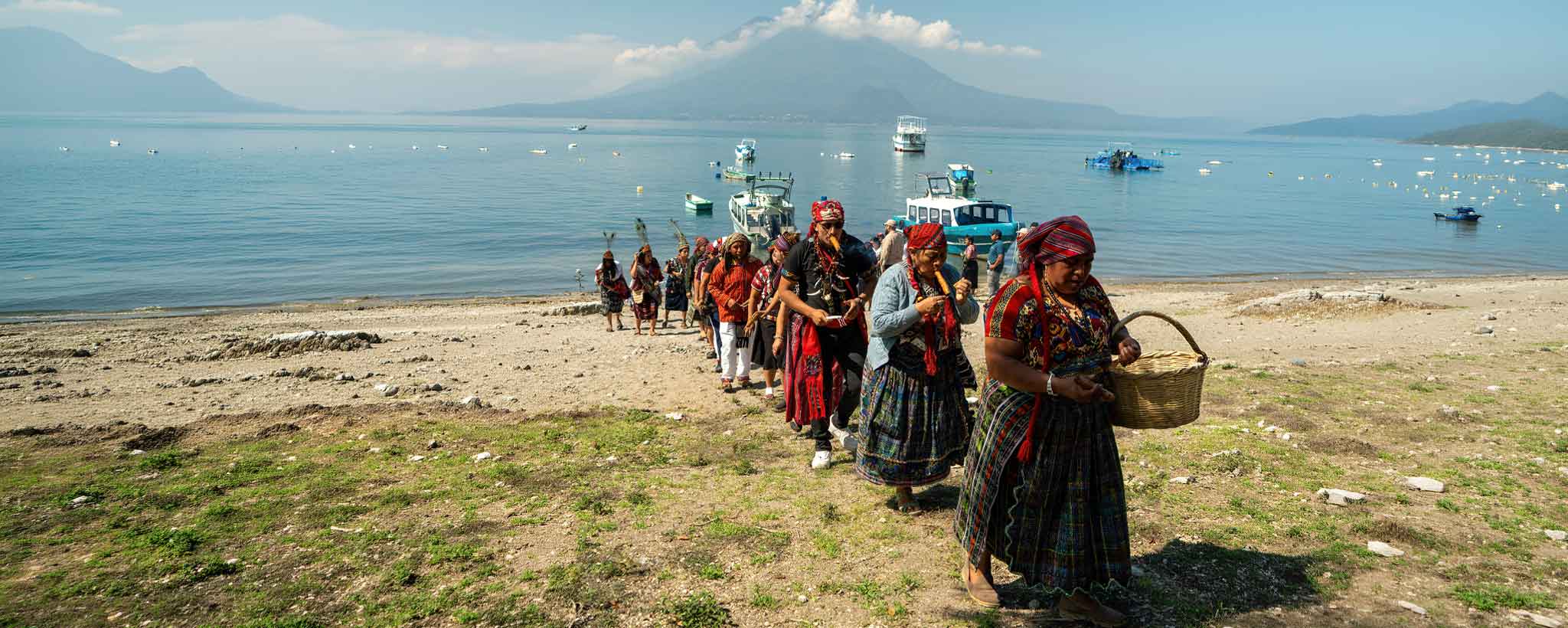
Atitlán is where you blend living Mayan culture with calm lake time, keeping the family mood from getting too "educational field trip." Villages like San Juan La Laguna can pair coffee with artisan work, weaving, and community visits that don't feel like a museum. If you need a bigger menu of options, Guatemala vacation destinations have enough variety to keep your itinerary from becoming one-note.
Plan logistics, comfort, and safety

Best seasons for harvest and clear weather
The dry season, roughly November to April, is the easiest for families, with clearer roads, better volcano views, and less mud drama. January and February are often the sweet spot. The rainy season can be cheaper and greener, but it also means slick trails and surprise downpours that test everyone's patience.
Tourism patterns shift hard around holidays and Semana Santa, and INGUAT tracks those flows if you like data more than vibes, which you can see through their official tourism updates.
What to bring for mud, sun, and altitude
You don't need to pack like you're moving in. You do need the basics that prevent small annoyances from becoming family fights:
- Closed shoes with grip, plus a backup pair if you're traveling in rainy months.
- Sun protection (sunscreen, hat, sunglasses), because the highland sun is sneaky.
- Light layers for cool mornings at elevation, then add layers as it heats up.
- Rain shell and quick-dry clothing if clouds are in the forecast.
- A small first-aid kit and any kid-specific meds you cannot replace easily.
Food, water, allergies, and bathrooms
Assume bathroom facilities on farms can be simple. Ask anyway. Bring tissues. Carry water, then actually drink it. If you have food allergies, communicate early, and don't be shy about repeating yourself in Spanish, because "maybe it's fine" is how you end up spending a night doing laundry in a hotel sink.
For entry rules, don't trust a random blog. Check Guatemala's official guidance from the national immigration authority, then keep digital and printed copies of your passport and insurance.
Book a tour that fairly supports farmers.

You're going to hear "supports farmers" everywhere. Cute. Ask for proof.
A farm or coffee cooperative that's serious about fairness can usually explain pricing logic without getting defensive. They can tell you what percentage stays in the community, what costs they carry (labor, fertilizer, transport), and how quality is measured. When someone talks confidently about lot separation, moisture targets, and cupping scores, that's a signal of competence. When they can also talk about payment flows, even better.
There's also a bigger sustainability layer. Programs like TechnoServe's work on top-working, basically grafting rust-resistant material onto older trees to stabilize incomes, show up in real operations, and you can read about that approach in their regenerative farming notes.
Signs of real transparency on pricing
You're looking for specifics, not slogans. Transparent operators can usually show how they track quality and why a certain price exists. If you're the kind of person who buys specialty coffee back home, think about how a roaster like Nossa Familia Coffee would evaluate a supplier: not just flavor notes, but repeatability, documentation, and settlement clarity. Charm doesn't keep a relationship stable. Data does.
Questions about pay, lots, and processing data
Ask about the lot you're tasting. Ask how it was processed. Ask how long fermentation ran, how drying was handled, and what the target moisture level is before storage. Ask who owns the coffee at each step. If the guide looks relieved that you asked, that's usually a good sign.
Red flags families can spot fast.
If the operation refuses to take photos everywhere, can't explain the basics without hand-waving, or dodges any question about where your money goes, keep your expectations realistic. You can still enjoy the day. You don't have to pretend it's ethical perfection.
What should you ask before you go?
Keep it practical, because you're traveling with humans, not mannequins. Ask these before you pay for a reservation:
- How long are the drives, and what's the total walking time on the farm?
- Are bathrooms available, and are they close to the main path?
- What hands-on steps are included for kids, and what is just observation?
- What languages does the guide speak, and will you have translation support?
- How does the tour revenue support the producing family or coop, in plain numbers?
FAQ
Is Guatemala expensive? Compared to North America and much of Europe, it's generally affordable, unless you insist on luxury everything, then yes, you can spend plenty.
Best months to visit? January and February are popular for clear weather, but November through April is the safer bet if you hate rain.
Is it safe? Most tourist areas are fine with normal precautions: use trusted shuttles, avoid flashing valuables, and don't freestyle late-night wandering.
Do you need Spanish? It helps, especially outside Antigua, but guides often speak English in tourist zones.
Can you go in the rainy season? You can, and it's greener with fewer visitors, with wet shoes planned for, and with flexible timing.
Conclusion
If you plan around altitude, season, and your family's real stamina, a coffee tour becomes the kind of trip your kids talk about later, like it's a story they own, not something you dragged them through. Antigua makes the entry easy; Huehuetenango and Cobán deepen the origin reality; Atitlán smooths the edges with culture and lake air; and the best farm experiences teach you to respect the full cycle, from seedling to cup, without swallowing the marketing whole. Keep your questions sharp, keep your days humane, and you'll go home tasting your morning brew differently.

0 Comments