Family-Friendly Private Tours in Guatemala
Plan a private Guatemala family journey designed around your children’s ages, pace, comfort needs, cultural interests, and optional Belize extension.
What Makes a Guatemala Tour Truly Family-Friendly?
A family-friendly tour is not defined by whether children are allowed.
It is defined by whether the journey has been designed with family reality in mind.
For parents, this distinction matters. A tour may include impressive destinations and still feel difficult if the days are too long, the transfers are poorly timed, the guide is not adaptable, or the itinerary leaves no room for rest.
Parents are not only planning what their children will see; they are trying to protect the mood of the journey, the health of the group, and the possibility that everyone returns home feeling closer rather than worn down.
A truly family-friendly Guatemala private tour considers several things before the journey begins.
Pace
Family travel needs rhythm. This means balancing active days with calmer ones, avoiding too many hotel changes, and leaving time for meals, rest, and spontaneous curiosity.
Sometimes the best decision is not adding another stop. It is protecting an afternoon at the hotel pool, a quiet walk through Antigua, or a slow morning before a transfer.
Guide Fit
A strong family guide does more than explain facts. The guide reads the group.
They know when to simplify, when to tell a story, when to pause, when to invite questions, and when to give the family space. At an archaeological site, this can make the difference between children seeing ruins and children imagining how people lived, traded, observed the sky, and built cities in the forest.
Transfer Planning
Distances in Guatemala can feel different from what families expect. Roads, terrain, traffic, and weather can affect timing. Private transportation helps families travel more comfortably, but good planning is still essential.
The best itineraries avoid unnecessary backtracking and consider when a transfer should happen, how long it should be, and whether a stop along the way will help the day feel easier.
Accommodation Choice
Family-friendly hotels are not only about having enough beds. They should support the rhythm of the trip.
Location, quiet, food options, room layout, pool access, safety-conscious design, and ease of movement can all affect how a family feels at the end of the day.
Flexibility
Families need room for the unexpected.
A child may need a slower morning. A teenager may become more interested in photography, wildlife, or history than expected. A grandparent may prefer a gentler route. Weather may change the best plan for a volcano or lake crossing.
Private travel gives families the ability to adjust without disrupting a larger group.
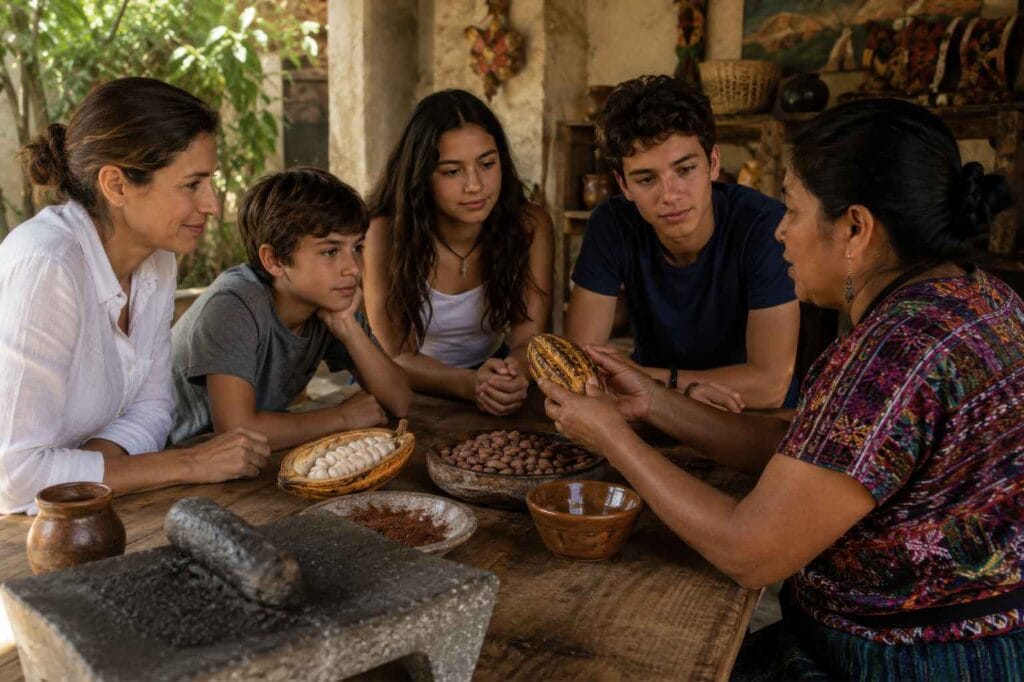
Cultural Context
Family-friendly cultural travel should never treat communities as entertainment.
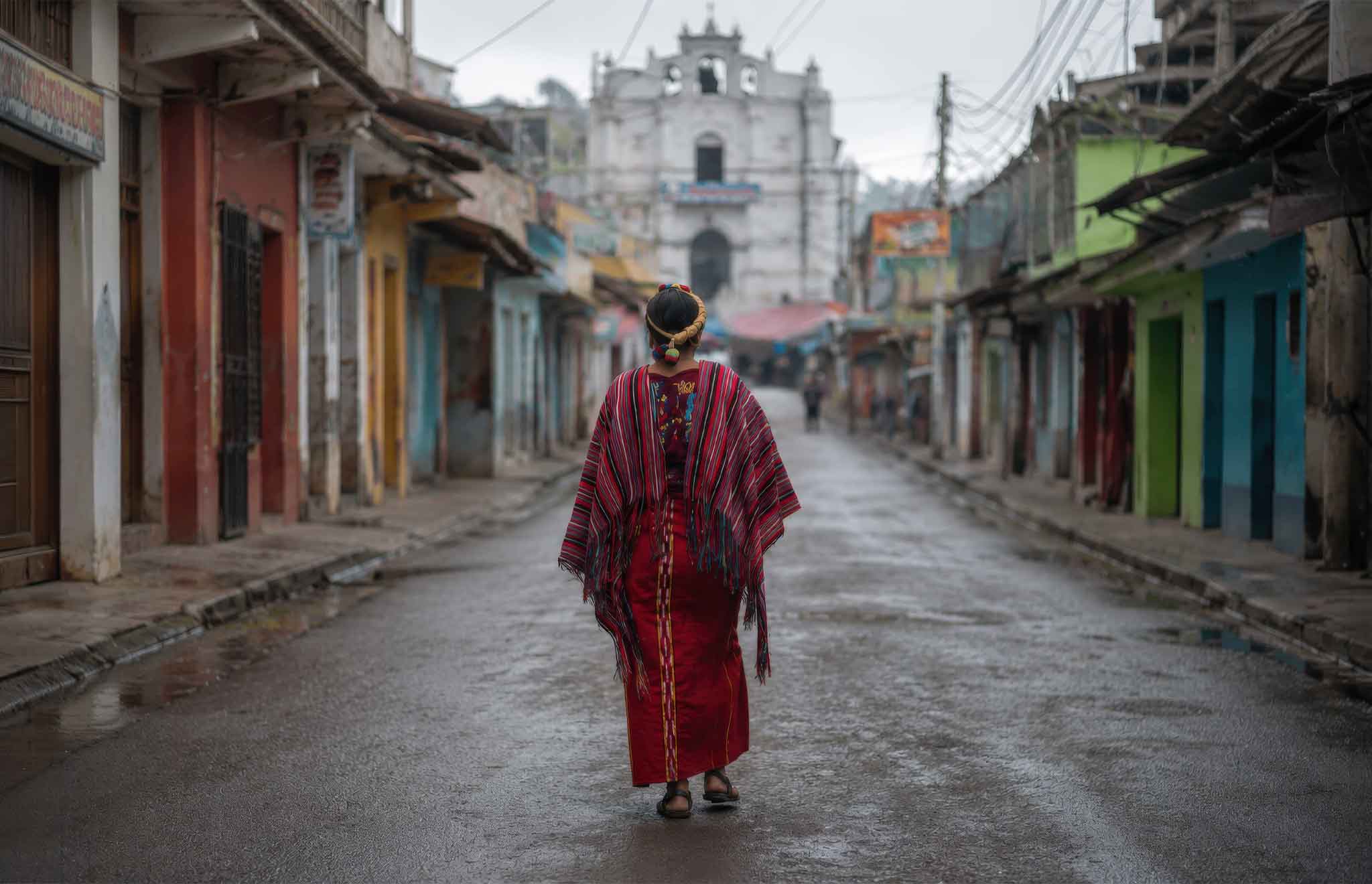
Children can learn a great deal from markets, textiles, food, language, ceremonies, and daily life when experiences are guided with respect. This means explaining context, behaving with care, asking before photographing people, and understanding that living traditions belong to communities, not to visitors.
A respectful family journey helps children become better travelers.
If your family is beginning to imagine this kind of journey, the most useful first step is to think about rhythm: your children’s ages, your preferred pace, your comfort needs, and the kinds of experiences that would help Guatemala feel meaningful rather than overwhelming.
Best Places to Visit in Guatemala as a Family
Every family itinerary should be shaped around age, interests, pace, and comfort level. Still, several destinations often work especially well for private family travel in Guatemala.
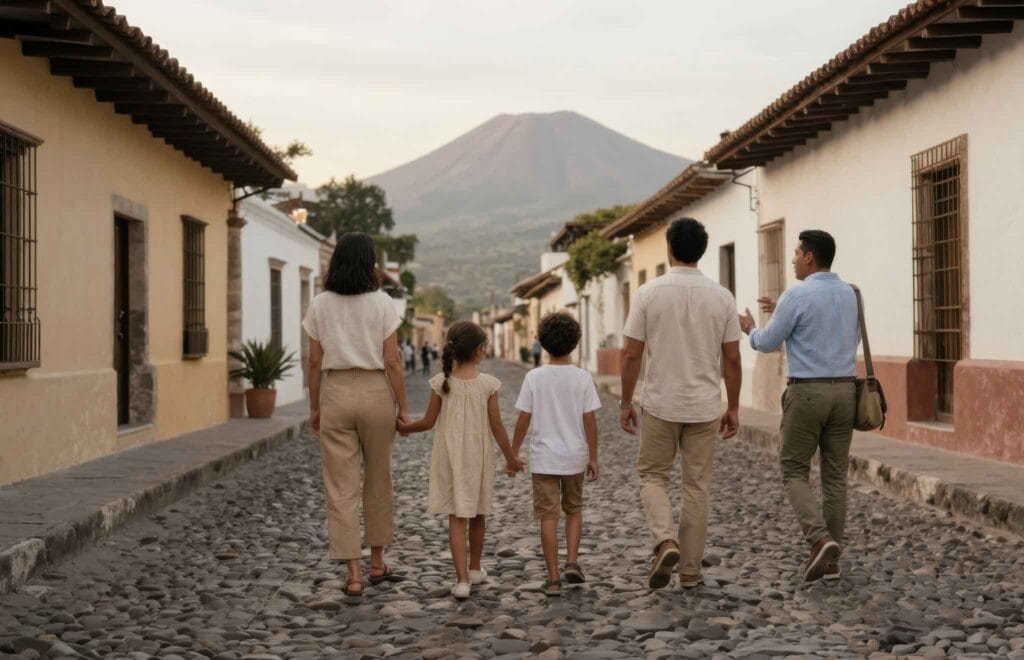
Antigua Guatemala
Antigua is often a gentle beginning for families.
The city is walkable, visually rich, and full of history, but it also gives families practical comfort: good hotels, restaurants, workshops, museums, markets, and nearby activities that can be adjusted by age.
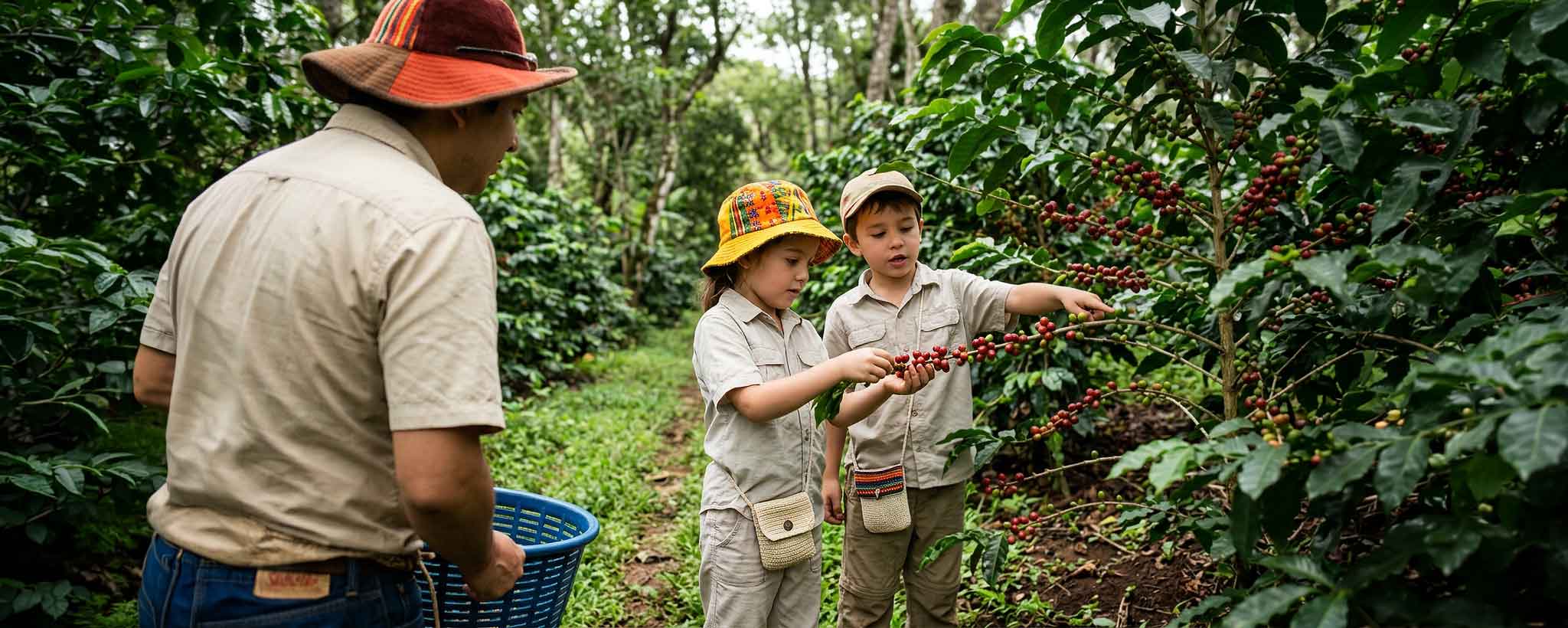
Families may explore colonial streets, visit ruins, learn about cacao, take a cooking, chocolate or coffe workshop, or enjoy views of surrounding volcanoes. For younger children, Antigua can be a soft landing. For teenagers, it can offer photography, food, history, architecture, and nearby adventure.
Antigua also works well because it does not need to be rushed. Some of the best family moments happen between planned visits: a quiet courtyard, a conversation with a guide, a child noticing a volcano in the distance, or an evening walk after dinner.
Lake Atitlán
Lake Atitlán brings a different rhythm.
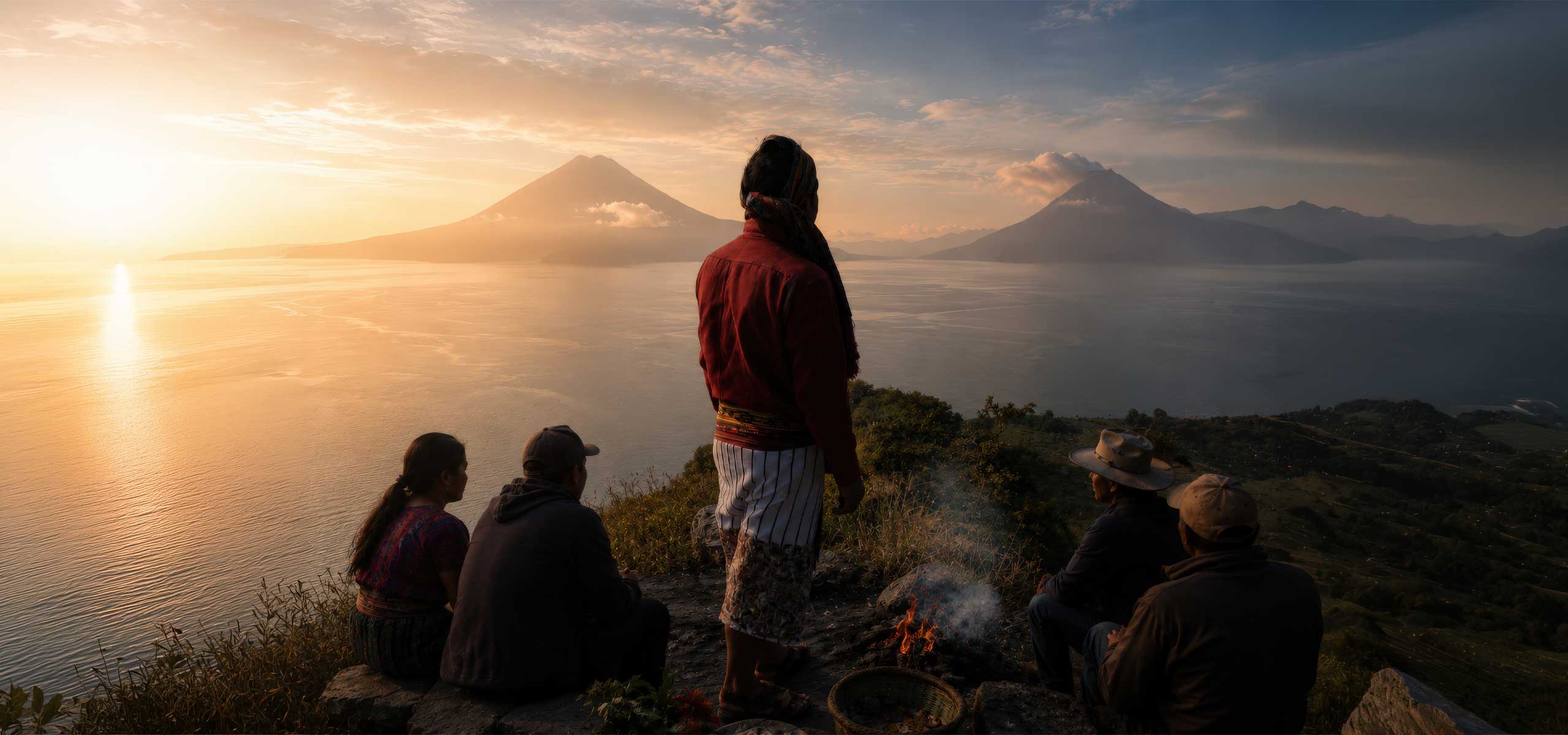
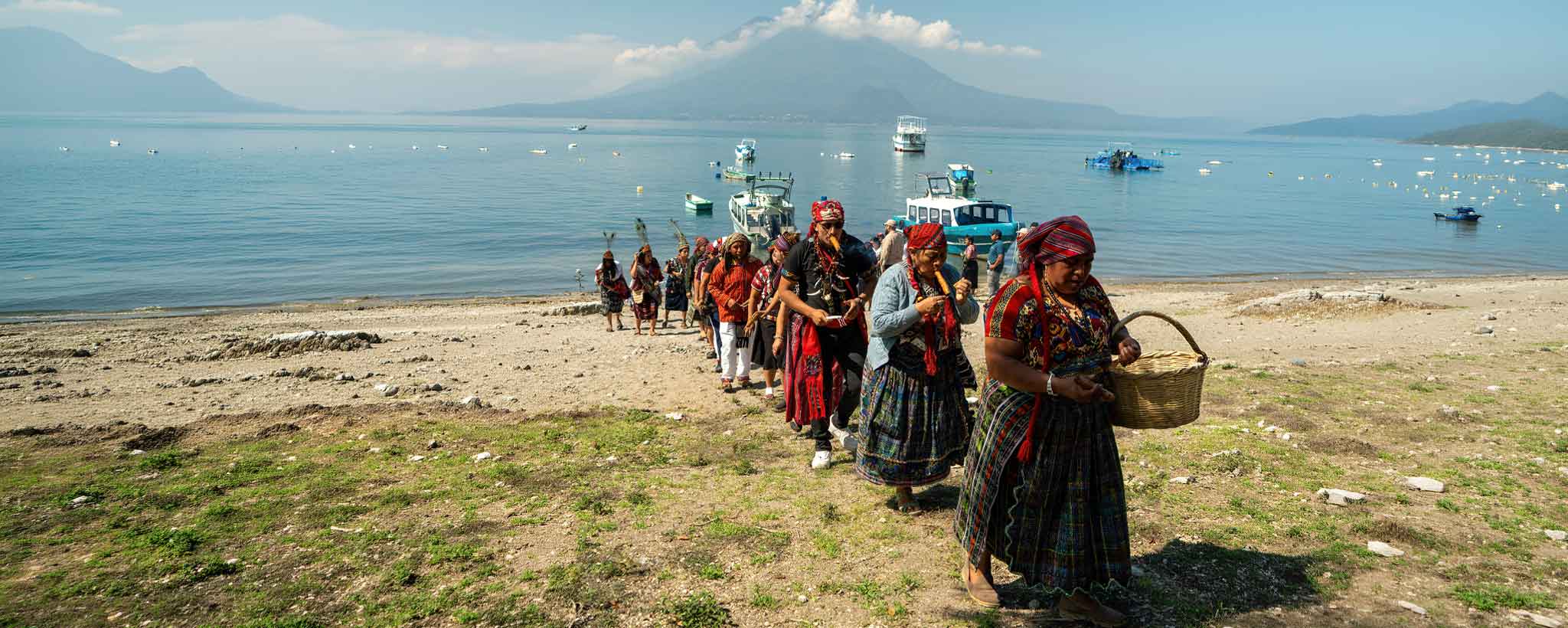
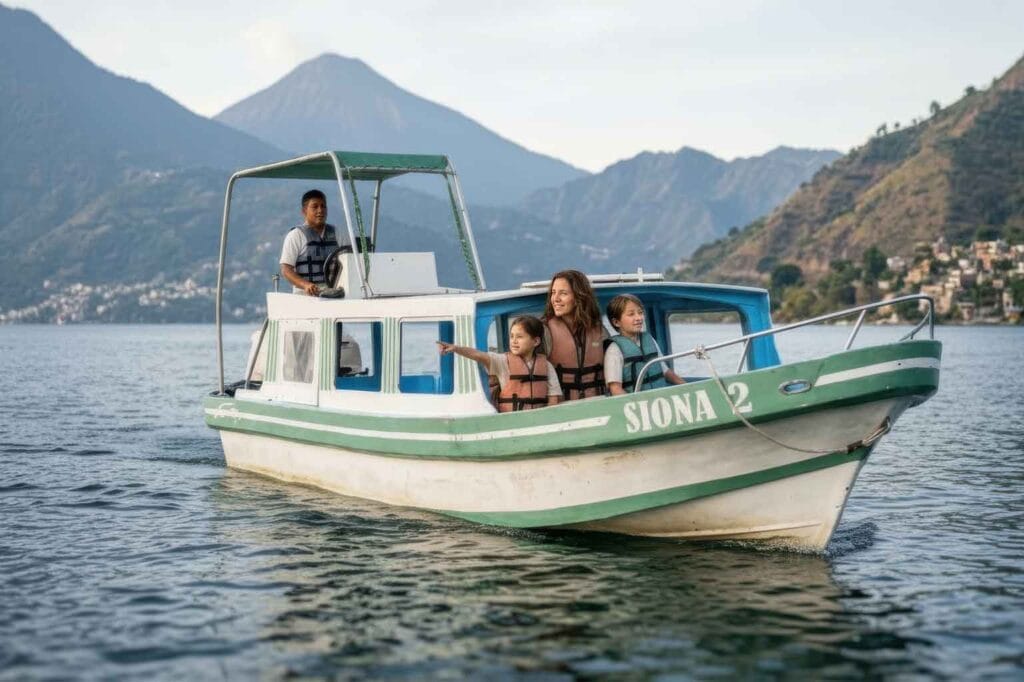
Here, the journey often slows. Families travel by boat between lakeside communities, see volcanoes from the water, learn about textiles, visit workshops, walk through villages, and experience how landscape and culture are closely connected.
Lake Atitlán often teaches families through rhythm rather than speed: crossing the water by boat, noticing how villages relate to the shoreline, pausing for a workshop, and leaving enough time for children to absorb the lake instead of rushing through it.
Boat timing matters here. A private plan can consider weather, lake conditions, the best time of day for crossings, and how much walking or stimulation makes sense after the boat ride.
The lake can be especially meaningful for families who want beauty without constant movement. It offers time to observe, ask questions, rest, and participate in carefully chosen cultural experiences.
For children, boat rides can make the destination feel exciting. For parents, the lake offers a balance between exploration and calm. For multigenerational families, the pacing can be adapted so that not everyone has to do the same activity at the same intensity.
Tikal and Petén
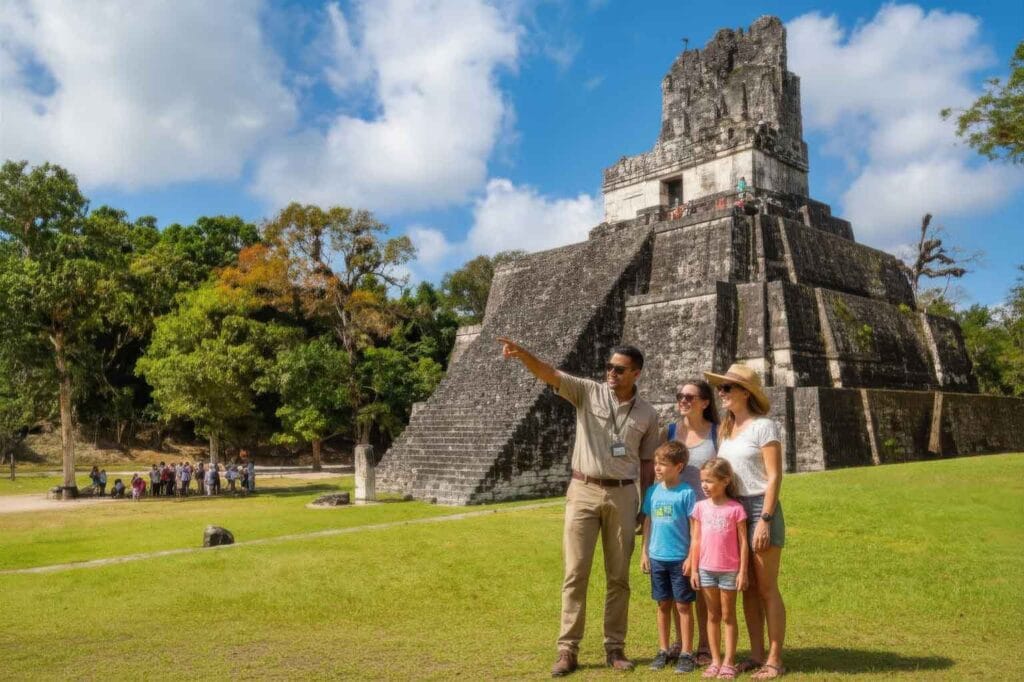
Tikal is often one of the most memorable parts of a Guatemala family journey.
It combines archaeology, jungle, wildlife, and imagination. Children may hear howler monkeys, look for birds, walk beneath enormous trees, and stand in plazas once used by one of the great Maya cities.
At Tikal and in Petén, the forest is not just the setting around the temples. It is part of the experience itself: habitat for birds and wildlife, protection for archaeological remains, and a living reminder that culture and nature in Guatemala cannot be separated.
But Tikal should be planned thoughtfully.
The site is large. Heat, walking distance, timing, shade, hydration, and attention span all matter. A private guide can shape the visit around the family, choosing routes and explanations that match children’s ages and the group’s energy.
For some families, a sunrise or sunset experience may be meaningful. For others, a well-paced morning visit will be better. The right choice is not the most dramatic option. It is the one that allows the family to be present.
Chichicastenango and the Highlands
Highland markets and communities can be powerful learning experiences when approached with care.
Chichicastenango is often known for its market, but families should understand that this is not simply a colorful place to shop. It is part of a living cultural and commercial landscape where local people buy, sell, pray, work, and maintain traditions.
With younger children, a shorter and better-guided market visit may be more respectful and more successful than staying too long. The goal is not to consume the scene, but to help the family understand what they are seeing and how to move through the space with attention.
A respectful visit helps families understand textiles, food, language, religious expression, and daily life without reducing the experience to a spectacle.
This type of travel can be especially valuable for children when adults model curiosity and respect.
Pacaya Volcano and Soft Adventure
Pacaya Volcano can work well for active families, but it should be considered carefully.
Age, fitness, weather, trail conditions, and comfort level all matter. Some families may enjoy the walk and the views. Others may prefer gentler viewpoints, nature walks, or less demanding activities.
Choosing Pacaya only when weather, stamina, and timing make sense is part of responsible family planning. A private itinerary allows the adventure level to match the family rather than forcing the family to match the activity.
Yaxhá, Flores, and Other Petén Experiences
For families interested in archaeology and nature, Petén can offer more than Tikal. Yaxhá, Flores, lakes, wildlife observation, and forest experiences can add depth without feeling repetitive.
These places are especially meaningful when a guide helps connect landscape, history, and daily experience. Children often remember what they can imagine: how people moved through the forest, how cities were built, why water mattered, and how nature and civilization existed together.
Private planning can also help families choose quieter moments, gentler routes, and experiences that respect the forest as a living system rather than simply a backdrop for adventure.
Meaningful Experiences for Children, Teenagers, Parents, and Grandparents
A good family journey does not need to entertain everyone in the same way.
Children, teenagers, parents, and grandparents often connect with Guatemala through different kinds of experiences. The strength of a private tour is that it can bring these interests together without making the journey feel fragmented.
Younger children may respond to movement, animals, colors, boats, stories, and hands-on activities. A chocolate workshop, a gentle nature walk, a boat ride on Lake Atitlán, or a short archaeological visit with storytelling can keep learning active.
Teenagers may appreciate more independence in the experience: photography, food, history, hiking, wildlife, archaeology, markets, or deeper conversations with guides. They may enjoy understanding the complexity of Guatemala rather than being given simplified explanations.
Parents often value the balance: enough learning to make the trip meaningful, enough comfort to make it manageable, and enough flexibility to prevent each day from feeling overplanned.
Grandparents may bring another layer to the journey. They may value slower pacing, comfortable hotels, private transportation, shade, accessible walking routes, and shared experiences that allow the family to be together without unnecessary strain.
Private travel helps make room for these differences.
A family does not need to choose between culture and comfort, or between learning and rest. With thoughtful planning, the journey can include both.
Suggested Private Family Journey Styles
Every Martsam family journey is custom designed. Still, many families begin with a general style of travel in mind.
These examples are not fixed packages. They are planning directions that can be shaped around your family.
First-Time Guatemala Family Journey
This style usually balances Antigua, Lake Atitlán, and Tikal or Petén. It works well for families who want a broad introduction to Guatemala with culture, nature, archaeology, and comfortable pacing.
The key is not adding too much. For many families, three well-designed regions create a stronger experience than trying to see the entire country.
Culture and Nature Family Tour
This journey may include Antigua, Lake Atitlán, highland communities, markets, nature reserves, volcano views, and selected wildlife experiences.
It is ideal for families who want children to understand how culture and landscape are connected, and why forests, lakes, volcanoes, and protected areas deserve care as well as admiration.
Teen Adventure and Discovery Journey
Teenagers may enjoy a more active itinerary with volcano walks, archaeology, kayaking or boat experiences, photography, food, markets, forest trails, and deeper historical interpretation.
This journey should still include downtime. Teenagers may have more stamina than younger children, but they also need space to absorb what they are seeing.
Multigenerational Guatemala Family Tour
For families traveling with grandparents, the itinerary should be especially careful about pacing, transfers, hotel comfort, walking demands, rest time, and flexible activity options.
The most successful multigenerational journeys often include shared anchor experiences with optional variations. Some family members may take a gentler activity while others explore more actively, then come back together for meals or guided cultural moments.
Guatemala Family Journey with Optional Belize Extension
Some families choose a Belize extension after Guatemala, especially when they have more time and want to add reef, beach relaxation, rainforest, or another perspective on the Maya world.
This extension should support the Guatemala journey, not compete with it. For many families, Guatemala provides the cultural, archaeological, and highland core. Belize can then add Caribbean ease, snorkeling, reef experiences, jungle lodges, or a slower ending by the sea.
Belize should be added only when it gives the family a better journey, not simply a longer one.
How Private Touring Reduces Family Travel Stress
Family travel often involves invisible work.
Parents are thinking about timing, meals, bathrooms, tired children, motion sickness, hotel comfort, luggage, dietary needs, safety, attention spans, and whether the day will still feel worthwhile if something changes.
Private touring does not remove every challenge from travel. Nothing can. But it gives families a stronger structure of support.
Private transportation means the family can travel directly, stop when needed, and avoid the pressure of keeping pace with strangers. Private guides can adapt explanations, timing, and routes. Custom planning can reduce unnecessary transfers and select accommodations that fit the family’s needs.
Most importantly, private touring allows the journey to respond to the family in real time.
If children are fascinated by birds, the guide can slow down. If the group is tired, a visit can be shortened. If grandparents need a gentler route, the day can be adjusted. If a market feels overwhelming, the guide can create context and help the family move with respect and confidence.
For Martsam, private travel is not about excess. It is about care.
It is the quiet confidence of knowing that the route has been considered, the guide is the right fit, the pace protects the experience, and the details exist so the family can be more present.
Planning guidance: When you begin a conversation with Martsam, it helps to share your children’s ages, travel dates, preferred pace, must-see places, comfort expectations, dietary needs, mobility considerations, and whether your family prefers more active days or slower cultural discovery.
Safety, Comfort, and Practical Planning for Families
Parents deserve honest guidance about safety.
No travel company should promise that any destination is risk-free. A responsible family travel plan should instead consider current conditions, route planning, transportation quality, guide judgment, destination selection, accommodation fit, medical access, food needs, and the family’s comfort level.
For many families, private travel offers practical advantages. It allows for trusted drivers, local guidance, flexible timing, carefully selected hotels, and itinerary decisions made with family needs in mind.
Practical planning should include:
- Reviewing current travel conditions before departure
- Choosing routes and destinations appropriate for the family
- Planning transfers realistically
- Considering altitude, heat, walking distance, and weather
- Selecting hotels that support family comfort
- Communicating dietary needs in advance
- Matching activities to age and energy level
- Building in rest time
- Carrying appropriate documents for children and guardians
- Leaving room for adjustments
Comfort also looks different for every family. Some families are comfortable with active days and rustic settings. Others prefer boutique hotels, shorter transfers, private meals, or more downtime. The right plan begins with understanding what comfort means for your family.
This is why a custom approach matters.
Families should not feel pressured into an itinerary designed for someone else.
Cultural Respect in Family Travel
One of the most valuable gifts of family travel is helping children learn how to enter another place with respect.
In Guatemala, culture is not an attraction. It is lived every day by people, families, communities, artisans, farmers, cooks, guides, elders, and children.
Maya heritage in Guatemala is not only something families encounter at archaeological sites. It continues through living languages, textiles, foodways, ceremonies, community knowledge, and daily life. A respectful family journey helps children understand this continuity, so they do not see culture as something frozen in the past or arranged for visitors.
A respectful family journey should help travelers understand context. Before visiting a market, children can learn that it is a place of work and exchange, not only a place for photographs. Before visiting a Maya site, they can learn that these places are connected not only to the past, but to living Maya identity. Before entering a community experience, families can be guided on appropriate behavior, photography, listening, and participation.
This kind of travel teaches more than facts.
It teaches attention.
Children learn that people are not scenery. Traditions are not performances. Nature is not a backdrop. A journey becomes more meaningful when families understand that they are guests.
Martsam’s role is to guide families into these experiences with care, dignity, and gratitude.
Optional Extension: Adding Belize to a Guatemala Family Tour
Guatemala should remain the heart of this journey.
For many families, it offers the strongest foundation: Maya archaeology, living culture, volcanoes, lakes, highlands, forests, and expert-guided learning. But for families with additional time, Belize can be a natural extension.
Belize may make sense when a family wants to add Caribbean coast, reef experiences, snorkeling, rainforest lodges, wildlife, or a slower beach ending after a culturally rich Guatemala itinerary.
The best Belize extension after Guatemala is not designed as a separate vacation placed beside the first. It works when the extension has a clear purpose.
For example, a family might begin in Antigua and Lake Atitlán, continue to Tikal or another Petén experience, then extend into Belize for reef, beach, or jungle time. This creates a broader Mundo Maya journey while giving the family a change of rhythm at the end.
Belize is especially worth considering for families who:
- Have enough time, usually beyond a short one-week trip
- Want beach or reef experiences after Guatemala
- Are interested in snorkeling, wildlife, or Caribbean landscapes
- Prefer a slower ending after active cultural travel
- Want a multi-country private itinerary with coordinated logistics
For other families, Guatemala alone may be the better choice. A deeper, better-paced Guatemala journey is often more rewarding than adding a second country too quickly.
Planning guidance: If a Belize extension after Guatemala is of interest, mention it early in the planning conversation. Martsam can help determine whether it enhances the journey or whether your family would be better served by focusing fully on Guatemala.
Who This Private Guatemala Family Journey Is Best For
A private Guatemala family tour is especially well suited to families who value learning, flexibility, and thoughtful planning.
It may be a strong fit if your family wants:
- A private journey designed around your children’s ages
- Cultural and natural experiences guided with context
- Private transportation and carefully planned logistics
- Flexibility when energy levels change
- Hotels selected for comfort, location, and family needs
- Expert local guides who can adapt to different ages
- A meaningful alternative to mass-market family travel
- A journey that balances discovery with downtime
It is also a strong option for multigenerational families, especially when grandparents, parents, teenagers, and younger children need different levels of activity and comfort.
This journey is best for families who want their children to be curious guests, not passive consumers of a destination. It is for parents who want to prepare their children to travel respectfully, not simply keep them entertained.
This may not be the right fit for families seeking the cheapest possible package, rigid group departures, fast-paced sightseeing, or entertainment-focused travel with little cultural context.
That does not make those travelers wrong. It simply means this style of travel serves a different purpose.
Martsam is best suited for families who want Guatemala to feel understood, not just visited.
Plan a Private Guatemala Family Tour with Martsam
The best family journeys begin with a conversation.
Not a package. Not a fixed departure. A conversation about how your family actually travels.
How old are your children? Are grandparents joining? Does your family prefer active mornings and quiet afternoons, or full days with carefully planned breaks? Are your children curious about wildlife, history, food, volcanoes, textiles, archaeology, or photography? Do you want Guatemala only, or would a Belize extension after Guatemala add the right ending?
These details matter.
They help shape the pace, route, guide selection, hotel style, transfer plan, and experiences that will make the journey feel right for your family.
When you speak with Martsam, the most useful details are not only dates and destinations. Tell us how your family moves through a day: who wakes early, who needs quiet time, who loves history, who gets tired on long drives, and what kind of pace will help everyone remain present.
Martsam can help you design a private Guatemala family journey around your interests, comfort needs, and preferred rhythm, with Belize included only when it genuinely improves the experience.
Traveling as a family is not about fitting more into each day.
It is about creating the conditions for everyone to notice, learn, rest, and remember together.
Frequently Asked Questions
Is Guatemala a good destination for families?
Yes, Guatemala can be a rewarding destination for families when the itinerary is designed thoughtfully. The most successful family trips consider pacing, private transportation, guide quality, hotel comfort, age-appropriate activities, and downtime. Guatemala is especially strong for families interested in culture, archaeology, nature, volcanoes, lakes, markets, and educational travel.
What are the best places to visit in Guatemala with kids?
Common family-friendly destinations include Antigua Guatemala, Lake Atitlán, Tikal and Petén, Chichicastenango, Pacaya Volcano, and selected nature or cultural experiences. The best combination depends on children’s ages, travel style, comfort level, and trip length.
Why choose a private family tour in Guatemala?
Private touring gives families flexibility, personal attention, private transportation, adaptable pacing, and guide support. This is especially helpful when traveling with children, teenagers, grandparents, or mixed-age groups. A private tour can be adjusted around energy levels, interests, weather, and comfort needs.
Is Guatemala safe for family travel?
Safety should be approached honestly and practically. Families should review current travel conditions and work with knowledgeable local planners who understand route selection, transportation, timing, hotel fit, and destination suitability. Private travel can support comfort and planning control, but no destination should be presented as risk-free.
How many days do families need in Guatemala?
Many families benefit from at least 7 to 10 days in Guatemala, depending on the destinations included. A shorter trip may focus on Antigua and Lake Atitlán. A longer journey can add Tikal, Petén, highland communities, volcano experiences, or more downtime. Families considering a Belize extension after Guatemala should usually allow additional days.
Can we visit Tikal with children?
Yes, Tikal can be an extraordinary family experience when planned well. The visit should consider walking distance, heat, timing, shade, hydration, attention span, and guide style. A private guide can adapt the route and explanation so children understand the site through stories, landscape, wildlife, and age-appropriate context.
Can grandparents join a private Guatemala family tour?
Yes. Guatemala can work well for multigenerational families when the itinerary considers mobility, transfer length, hotel comfort, walking demands, rest time, and flexible activity options. Private planning is especially valuable when different family members have different needs.
Can we customize the itinerary around our children’s interests?
Yes. A private Guatemala family tour can be shaped around archaeology, wildlife, food, textiles, volcanoes, photography, history, soft adventure, culture, or rest. Sharing your children’s ages and interests early helps create a better itinerary.
Can a Guatemala family tour include Belize?
Yes, a Belize extension after Guatemala can be added for families with enough time. It works especially well for families who want to add reef, snorkeling, beach relaxation, rainforest, wildlife, or another perspective on the Maya world after the Guatemala portion of the trip.
Should Belize be part of our first Guatemala family trip?
It depends on your trip length and goals. If time is limited, a deeper Guatemala itinerary may be better. If your family has more time and wants a balance of culture, archaeology, rainforest, reef, and beach, Belize may be a meaningful extension after Guatemala.