Guatemala UNESCO World Heritage Sites | Cultural Wonders
Guatemala UNESCO World Heritage Sites like Antigua, Tikal, and Quiriguá reveal ancient Maya history, colonial charm, and rich cultural significance.
Guatemala offers a rich tapestry of cultural and natural wonders that reflect its vibrant history and biodiversity. Among its treasures, four UNESCO World Heritage Sites stand out. These include three cultural sites and one mixed site, Tikal National Park. Each site represents a unique chapter in Guatemala's story, from ancient Mayan civilizations to Spanish colonial influences.
UNESCO recognizes these sites for their outstanding universal value. Cultural criteria highlight human creativity, architectural achievements, and traditions, while natural criteria celebrate exceptional beauty and ecological importance. The world heritage sites in Guatemala—Antigua Guatemala, Quirigua, Tikal, and Takalik Abaj—invite you to explore their timeless significance. Whether you seek Guatemala Tour Packages or Tours to Tikal, these destinations promise unforgettable experiences.
Key Takeaways
- Guatemala's UNESCO World Heritage Sites show its amazing history and nature. These include Antigua Guatemala, Quirigua, Tikal, and Takalik Abaj.
- Antigua Guatemala has beautiful old buildings and stone streets. It was once the capital and is very important historically.
- Quirigua is famous for its detailed stone carvings and altars. These show the great art of the Mayan people.
- Tikal National Park mixes old Mayan ruins with many plants and animals. It is perfect for people who love history and nature.
- Protecting these places from city growth and climate change is important. Visitors can help by being eco-friendly when they visit.
La Antigua Guatemala

Historical Significance
Spanish colonial history and Baroque architecture
Antigua Guatemala, a beautiful and magical colonial city, reflects the grandeur of Spanish colonial history. Its Baroque architecture stands as a testament to the artistic and cultural achievements of the colonial era. The Cathedral of St. Joseph, completed in 1680, showcases intricate sculptures on its façade. La Merced Church, built in 1552, is another masterpiece, featuring Churrigueresque decorations added later. These structures highlight the fusion of European and indigenous influences, creating a unique architectural style.
Role as the former capital of Guatemala
Antigua Guatemala’s history as the former capital of Guatemala adds to its significance. The city, originally named Santiago de los Caballeros, became the capital on March 10, 1543. It replaced the previous capital, which was destroyed by a lahar in 1541. For over 200 years, Antigua served as the political, economic, and cultural center of the region. However, the devastating Santa Marta earthquakes in 1773 led to the relocation of the capital to present-day Guatemala City.
Unique Features
Preserved colonial buildings and cobblestone streets
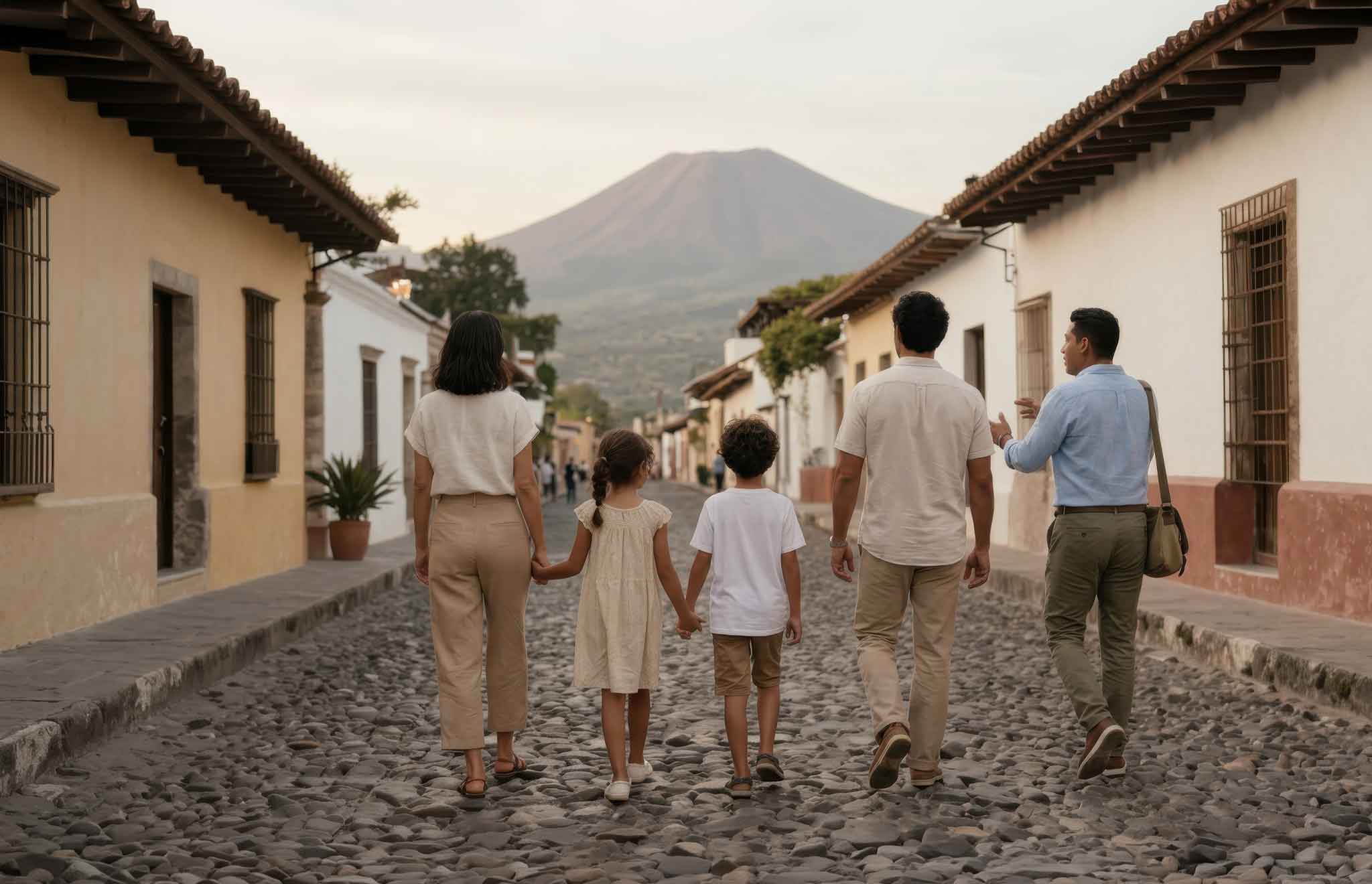
Walking through Antigua Guatemala feels like stepping back in time. The city’s cobblestone streets and well-preserved colonial buildings create a charming atmosphere. Many of these structures remain untouched, preserving their original integrity. The city’s layout and urban planning reflect its colonial heritage, making it a living museum of history.
Iconic landmarks like the Santa Catalina Arch and La Merced Church
Antigua Guatemala is home to iconic landmarks that captivate visitors. The Santa Catalina Arch, built in 1606, is one of the most photographed sites in the city. It once connected a convent to a school, allowing nuns to cross without being seen. La Merced Church, with its stunning yellow façade and intricate details, stands as a symbol of the city’s colonial past.
UNESCO Designation
Criteria for inclusion as a UNESCO World Heritage Site
Antigua Guatemala earned its place as a UNESCO World Heritage Site in 1979. The city met several criteria, including its status as a well-preserved colonial city and its testimony to cultural exchange. Its architecture and urban planning reflect the social, economic, and religious aspects of the colonial era. The city also showcases an exceptional interchange of human values through its unique blend of European and indigenous influences.
Importance of preserving its cultural and architectural legacy
The UNESCO designation has played a vital role in preserving Antigua Guatemala’s legacy. Restoration efforts have ensured that the city’s colonial character remains intact. Regular maintenance of historical buildings and disaster management plans protect the city from natural threats. The local community actively participates in preservation initiatives, ensuring that this historic city of Antigua continues to inspire future generations.
Archaeological Park and Ruins of Quirigua

Historical Significance
Role in the Mayan civilization and trade networks
Quirigua played a vital role in the Mayan civilization as a hub of trade and cultural exchange. Its location along the Motagua River allowed it to control key trade routes. Goods like jade and cacao moved through Quirigua, connecting the highlands with the Caribbean coast. This strategic position also linked it to other important Mayan cities, such as Copán and the Petén Basin.
Quirigua’s history includes remarkable milestones. In 738 AD, the city successfully rebelled against its powerful neighbor, Copán. This uprising led to the capture and sacrifice of Copán’s king, marking Quirigua’s rise as an independent state. The reign of Cauac Sky (723-784 AD) further solidified its status as a political and cultural center during the Late Classic period.
Year | Milestone Description |
|---|---|
AD 200 | Evidence of human occupation begins. |
AD 600-900 | Peak of Quirigua during the Late Classic period. |
723-784 | Reign of Cauac Sky, establishment as a capital. |
738 | Uprising against Copán, sacrifice of its king. |
Connection to other Mayan city-states
Quirigua maintained strong ties with other Mayan city-states. Its relationship with Copán, though initially cooperative, turned adversarial, as seen in the 738 AD rebellion. The city’s influence extended to the Petén Basin and beyond, showcasing its importance in the broader Mayan world.
Unique Features
Intricately carved stelae and altars
Quirigua is renowned for its intricately carved stelae and altars, which showcase the artistry of the Mayan civilization. Unlike the two-dimensional carvings found at other sites, Quirigua’s stelae feature three-dimensional sculptures. These include detailed glyphic texts and mid-relief carvings that depict rulers and ceremonial scenes. The craftsmanship reflects the city’s prosperity and cultural significance.
Largest known Mayan stelae (Stela E)
Stela E, the largest known Mayan stela, stands as a testament to Quirigua’s artistic achievements. This massive monument measures 10.6 meters (35 feet) tall, with nearly 3 meters buried underground, and weighs approximately 65 tons. It portrays K'ak' Tiliw Chan Yopaat, a prominent ruler, holding the ‘Manikin Scepter’ to signify his divine authority. Stela E is not only a masterpiece of Mayan art but also one of the largest freestanding stone sculptures in the Americas.
UNESCO Designation
Recognition for its artistic and historical value
The Archaeological Park and Ruins of Quirigua earned its UNESCO World Heritage designation in 1981. The site was recognized for its exceptional artistic and historical value. Its stelae and altars represent some of the finest examples of Mayan sculpture, offering insights into the civilization’s cultural and political achievements.
Efforts to protect the site from environmental threats
Preservation efforts focus on protecting Quirigua from environmental threats, such as erosion and vegetation overgrowth. UNESCO’s involvement has brought international attention to these challenges, ensuring that this historic site remains intact for future generations. Conservation programs and community initiatives play a crucial role in safeguarding its legacy.
Tikal National Park

Historical Significance
One of the most important Mayan cities
Tikal National Park stands as one of the most significant Mayan cities, showcasing the grandeur of this ancient civilization. Founded by Yax Ehb Xook, Tikal’s dynasty played a central role in shaping the political landscape of the Maya region. During the Early Classic period, power concentrated at Tikal and its rival, Calakmul, making it a hub of influence. The city’s dynamic growth stimulated the development of nearby settlements, further cementing its importance.
Tikal’s architecture reflects its political and religious power. Structures served as platforms for rulers to perform rituals, reinforcing their authority and connecting with the gods. Stelae and altars in the central plaza commemorate key events, celebrating the achievements of Tikal’s elite. These elements highlight the city’s role as a cultural and political powerhouse.
Role in Mayan politics, culture, and astronomy
Tikal’s contributions extended beyond politics. The city became a center for cultural and astronomical advancements. Its urban planning demonstrated a deep understanding of social hierarchy and environmental strategy. The alignment of temples and pyramids with celestial events reveals the Maya’s sophisticated knowledge of astronomy. This integration of science, culture, and religion made Tikal a beacon of Mayan innovation.
Unique Features
Iconic temples and pyramids, such as Temple I and Temple IV
Tikal National Park is renowned for its iconic pyramids, which dominate the skyline. Temple I, also known as the Temple of the Great Jaguar, rises 47 meters and served as a royal tomb. Temple IV, the tallest structure at 70 meters, offers breathtaking views of the surrounding jungle. These pyramids were constructed in alignment with the Maya calendar, reflecting the civilization’s intricate relationship with time and ritual. The Twin-pyramid Complex, built every 20 years, further showcases Tikal’s architectural ingenuity.
The city’s internal causeways connected ceremonial and residential areas, creating a cohesive urban layout. Structures like the Temple of the Inscriptions, adorned with hieroglyphic panels, provide insights into the Maya’s history and beliefs.
Biodiversity and its status as a natural reserve
Tikal National Park is not just a cultural treasure; it is also a biodiversity hotspot. The park’s lush rainforest is home to a wide variety of flora and fauna. Towering kapok trees and tropical cedar dominate the landscape, while animals like jaguars, howler monkeys, and toucans thrive in this protected habitat. The park’s dual role as a cultural and natural reserve makes it a unique destination for visitors.
| Flora | Fauna |
|---|---|
| Kapok tree (Ceiba pentandra) | Jaguars |
| Tropical cedar (Cedrela odorata) | Geoffroy's spider monkeys |
| Mahogany (Swietenia macrophylla) | Crested eagles |
| Ocellated turkeys | |
| Green parrots |
UNESCO Designation
Dual recognition for cultural and natural heritage
Tikal National Park earned its UNESCO World Heritage designation in 1979. It is one of the few sites recognized for both cultural and natural heritage. The park’s archaeological significance and ecological diversity make it a global treasure. This dual recognition highlights the importance of preserving both its ancient ruins and its vibrant ecosystem.
Challenges in balancing tourism and conservation
Managing tourism while protecting Tikal’s integrity remains a challenge. Increased visitor numbers strain the park’s resources, especially in popular areas. Demand for land and natural resources threatens the park’s biodiversity. Conservation efforts focus on addressing these issues, ensuring that Tikal remains a sustainable destination. As a visitor, you can contribute by respecting guidelines and supporting preservation initiatives.
Takalik Abaj

Historical Significance
A 1700-year-old archaeological site
Takalik Abaj, located in the Pacific lowlands of Guatemala, is one of the oldest archaeological sites in the region. Its history spans over 1,700 years, beginning in the Middle Preclassic period (around 800 BC). The site showcases the evolution of early Mesoamerican societies, reflecting their social and political complexity. Structures like ceremonial platforms and tombs reveal the advanced architectural techniques of its builders. These features make Takalik Abaj a vital piece of Guatemala’s ancient heritage.
Connection to both Mayan and Olmec civilizations
Takalik Abaj serves as a bridge between the Olmec and Maya civilizations. During the Late Preclassic period, the site transitioned from Olmec influence to distinct Maya styles. Monumental sculptures and hieroglyphic inscriptions highlight this cultural shift. You can see how the Olmec’s artistic traditions evolved into the Maya’s unique expressions. The site also played a key role in trade, connecting regions through networks that exchanged obsidian, cacao, and other goods.
The carved monuments at Takalik Abaj document the interplay between Olmec and Maya cultures.
Before 400 BC, Olmec influence dominated, but later, Maya artwork emerged.
The site’s strategic location made it a hub for obsidian trade, linking it to distant regions.
Unique Features
Stone sculptures and ceremonial structures
Takalik Abaj is famous for its stone sculptures and ceremonial platforms. Structures like the Pink Structure and Structure 7 showcase the site’s ceremonial importance. The Pink Structure, dating back to the Olmec period, served as a platform for rituals. Structure 7, with its astronomical alignments, reflects the advanced knowledge of its builders. Potbelly monuments, depicting human figures, add a unique artistic element to the site. These sculptures provide a glimpse into the spiritual and cultural life of ancient Mesoamerica.
Evidence of early trade and cultural exchange
Takalik Abaj thrived as a center for trade and cultural exchange. The site was a major producer of cacao, a prized commodity in Mesoamerica. Cacao served as both a ritual beverage and an early form of currency. The trade networks extended far, connecting Takalik Abaj to regions in Mexico and El Salvador. Obsidian, ceramics, salt, and maize were also traded, making the site a bustling hub of activity. This vibrant exchange of goods and ideas shaped the region’s cultural landscape.
UNESCO Designation
Recent addition to the UNESCO World Heritage Sites in 2023
In 2023, Takalik Abaj joined the list of UNESCO World Heritage Sites. Its designation recognizes the site’s unique blend of Olmec and Maya cultural elements. The high concentration of Olmec-style sculptures outside the Gulf of Mexico highlights its archaeological importance. This recognition ensures that Takalik Abaj receives the attention and resources needed for its preservation.
Importance of its archaeological and cultural contributions
Takalik Abaj offers invaluable insights into the early development of Mesoamerican civilizations. Its monuments and artifacts reveal the complex interactions between the Olmec and Maya. The site’s role in trade and its architectural achievements underscore its significance. By visiting Takalik Abaj, you can witness a remarkable chapter in the history of world heritage sites in Guatemala.
Conservation Efforts and Challenges
Role of UNESCO Status
How UNESCO designation aids in funding and awareness
The UNESCO designation plays a vital role in protecting Guatemala’s cultural heritage. It brings international recognition to historic sites like Antigua Guatemala and Tikal National Park. This recognition attracts funding for restoration and conservation projects. These funds help maintain historic buildings and safeguard archaeological treasures. The designation also raises global awareness about the cultural significance of these sites, encouraging responsible tourism.
International collaboration for preservation
UNESCO World Heritage status fosters collaboration with other UNESCO sites worldwide. This partnership allows cities like Antigua to exchange knowledge and share best practices in preservation efforts. International recognition has enriched conservation strategies, ensuring sustainable methods to protect Guatemala’s cultural heritage. These collaborations have strengthened efforts to preserve the list of UNESCO World Heritage Sites in Guatemala.
Current Challenges
Threats from urbanization, climate change, and tourism
Urbanization poses a significant threat to Guatemala’s historic sites. Expanding cities encroach on protected areas, endangering their integrity. Climate change also impacts preservation efforts. Rising temperatures and unpredictable weather accelerate the deterioration of historic buildings and archaeological sites. Tourism, while beneficial for the economy, creates challenges. Overcrowding and improper visitor behavior can damage attractions, reducing their cultural significance.
Importance of sustainable tourism practices
Sustainable tourism is essential to balance preservation and visitor experience. You can contribute by following guidelines, respecting restricted areas, and supporting local conservation initiatives. Responsible tourism ensures that Guatemala’s main tourist attractions remain intact for future generations. By choosing eco-friendly options, you help protect the country’s cultural heritage and natural beauty.
Community Involvement
Local efforts in protecting and maintaining the sites
Local communities play a crucial role in preservation efforts. Residents of cities like Antigua actively participate in maintaining historic buildings and archaeological sites. Community-led initiatives focus on restoration and conservation, ensuring that Guatemala’s historical attractions retain their charm. These efforts highlight the importance of grassroots involvement in safeguarding cultural heritage.
Educational programs to raise awareness
Educational programs empower communities to protect their heritage. Workshops and school programs teach the value of preserving historic sites. These initiatives inspire younger generations to appreciate their cultural significance. By raising awareness, these programs ensure that Guatemala’s UNESCO World Heritage Sites remain a source of pride and learning for years to come.
Guatemala’s UNESCO World Heritage Sites offer a glimpse into the country’s rich cultural and natural legacy. Antigua’s colonial architecture, despite surviving earthquakes, reflects its historical importance under Spanish rule. Quirigua’s sculptures, depicting mythological animals, reveal the beliefs of early Mayans. Tikal National Park combines ancient Mayan structures with a thriving ecosystem, creating a unique blend of history and nature. These sites showcase the grandeur of ancient civilizations and the artistry of their architectural designs.
Protecting these treasures ensures their stories endure for future generations. UNESCO designation enhances preservation efforts, fosters community pride, and supports sustainable tourism. By visiting responsibly, you contribute to safeguarding these irreplaceable landmarks.
FAQ
What is the best time to visit Guatemala's UNESCO World Heritage Sites?
The dry season, from November to April, offers the best weather for exploring. You’ll enjoy clear skies and comfortable temperatures, perfect for visiting sites like Tikal or Antigua. However, the rainy season (May to October) brings fewer crowds and lush landscapes, especially in Tikal National Park.
Are guided tours necessary for these sites?
Guided tours enhance your experience by providing historical and cultural insights. At Tikal, guides explain the significance of temples and Mayan astronomy. In Antigua, they share stories about colonial landmarks. While not mandatory, tours help you appreciate the sites more deeply.
How can you support conservation efforts while visiting?
You can support conservation by following site rules, avoiding littering, and respecting restricted areas. Choose eco-friendly accommodations and local guides. Purchasing souvenirs from local artisans also helps communities involved in preservation efforts. Your responsible actions make a difference.
Are these sites family-friendly?
Yes, these sites welcome families. Kids can explore Tikal’s pyramids, spot wildlife, or learn about Mayan history. Antigua’s cobblestone streets and colorful landmarks captivate all ages. Quirigua and Takalik Abaj offer educational experiences, making them great for curious young minds.
What should you pack for visiting these sites?
Pack comfortable walking shoes, sunscreen, insect repellent, and a reusable water bottle. Lightweight clothing suits the tropical climate, especially in Tikal. Don’t forget a camera or smartphone to capture the stunning architecture and landscapes. A small backpack keeps your essentials handy.
📝 Tip: Always check the weather forecast before your trip to prepare accordingly!