Heloderma charlesbogerti: The Fight to Save the Guatemalan Beaded Lizard
- What is Heloderma charlesbogerti?
- Why is Heloderma charlesbogerti endangered?
- Where does Heloderma charlesbogerti live?
- What is special about its venom?
- How does Heloderma charlesbogerti impact local culture?
- What efforts are being made to protect Heloderma charlesbogerti?
- Can Heloderma charlesbogerti be kept as a pet?
Key Takeaways
- Heloderma charlesbogerti, the Guatemalan beaded lizard, is critically endangered, with fewer than 500 remaining in the wild, so the need for action is urgent.
- The species is endemic to the dry thorn scrub forests of the Motagua Valley, underscoring the need for habitat conservation and restoration.
- Primary threats are habitat loss, black market trade, climate change, and local myths, which should be tackled with specialized awareness-raising campaigns and law enforcement.
- Conservation measures like captive breeding, habitat stewardship, and community involvement have been effective but need to be scaled up and supplemented by research.
- Heloderma charlesbogerti's venom is a treasure trove for medicine, underscoring the greater scientific importance of its conservation.
- International collaboration, sustainable ecotourism, and local community engagement are key to achieving a future for this elusive lizard and its habitat.
Heloderma charlesbogerti is a rare species of venomous lizard found mainly in dry forests and thorn scrub areas of Guatemala. Known as the Guatemalan beaded lizard, it stands out for its beaded skin, thick body, and short limbs.
Many experts list it as endangered due to habitat loss and illegal trade. To learn more about its traits, habitat, and why it matters for conservation, keep reading the main sections below.
What is Heloderma charlesbogerti (Guatemalan beaded lizard)?
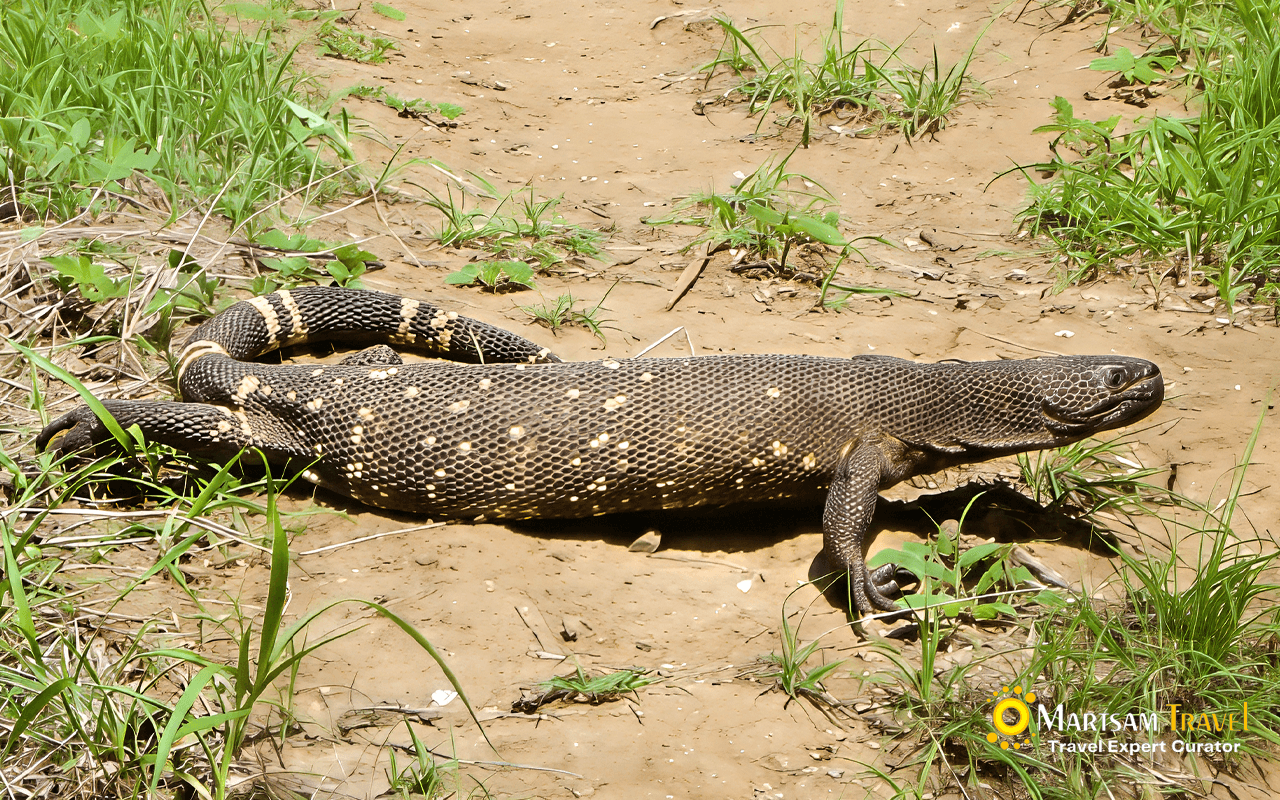
Heloderma charlesbogerti, known as the Guatemalan beaded lizard, is a member of the family Helodermatidae that is critically endangered. Endemic to the Motagua Valley in eastern Guatemala, this rare lizard is named in honor of Charles Mitchill Bogert, a renowned herpetologist recognized for his research on Heloderma species. Fewer than 600 individuals are believed to remain in the wild.
1. Taxonomy
Heloderma charlesbogerti belongs to the order Squamata, family Helodermatidae, and is one of just a handful of venomous lizards in the world. Initially considered a subspecies of the Mexican beaded lizard, it was reclassified as a full species by genetic isolation and distinct characteristics.
The holotype, an adult female collected in 1984, is stored at the University of Texas at Arlington. This distinction helps fuel conservation by portraying the reptile as distinct and in dire need of protection.
2. Physicality
The Guatemalan beaded lizard is notable for its black, granular skin pebbled with bony scales called osteoderms—'studded skin'. Its tail is banded with five yellow bands, an identifying characteristic.
It has small, immobile eyes and a thick tail for fat storage. Measuring up at just under 60 cm, it is the smallest of the Heloderma.
3. Habitat
This lizard inhabits only the dry thorn scrub forests of the Motagua Valley, Zacapa, Guatemala, approximately 12 km east of Gualan. The Motagua Valley is essential to the species, offering them their unique refuge and sustenance.
Separated by 250 km from other Heloderma, it is vulnerable to habitat destruction, fires, and poachers.
4. Behavior
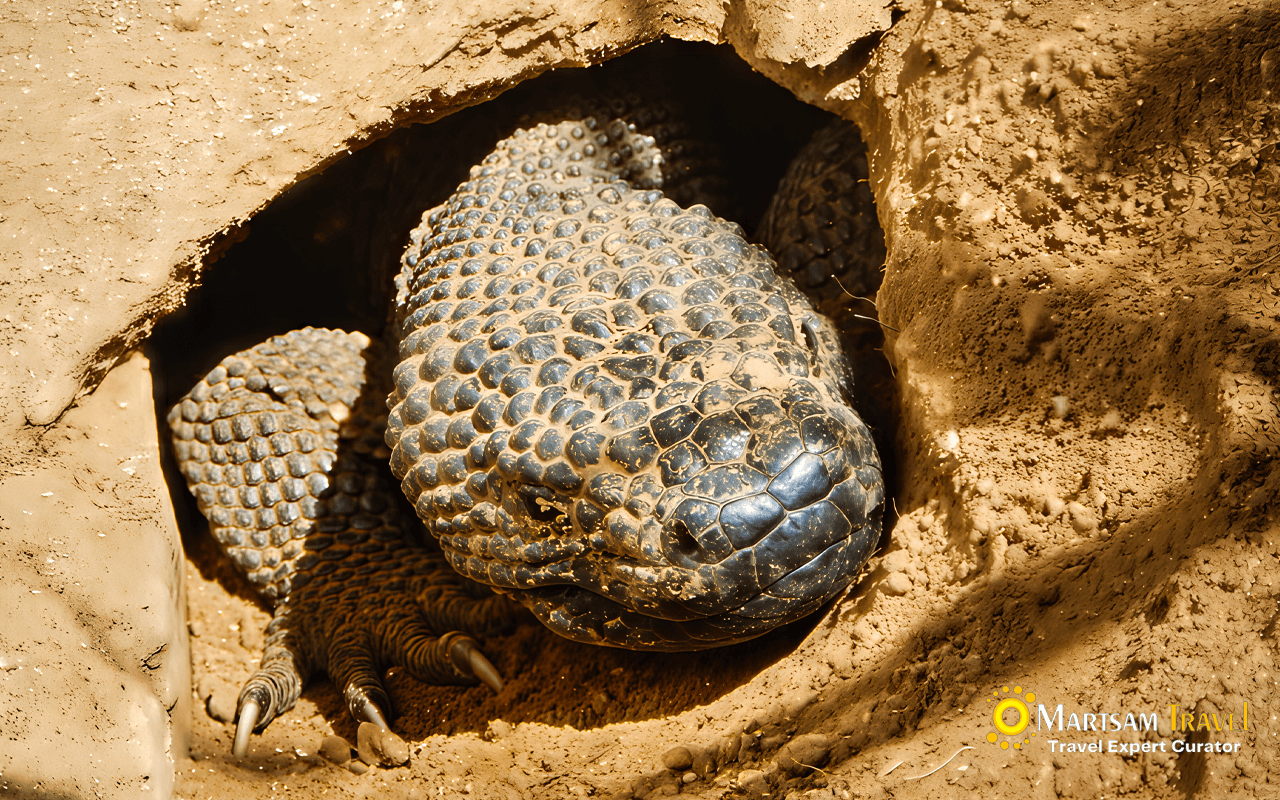
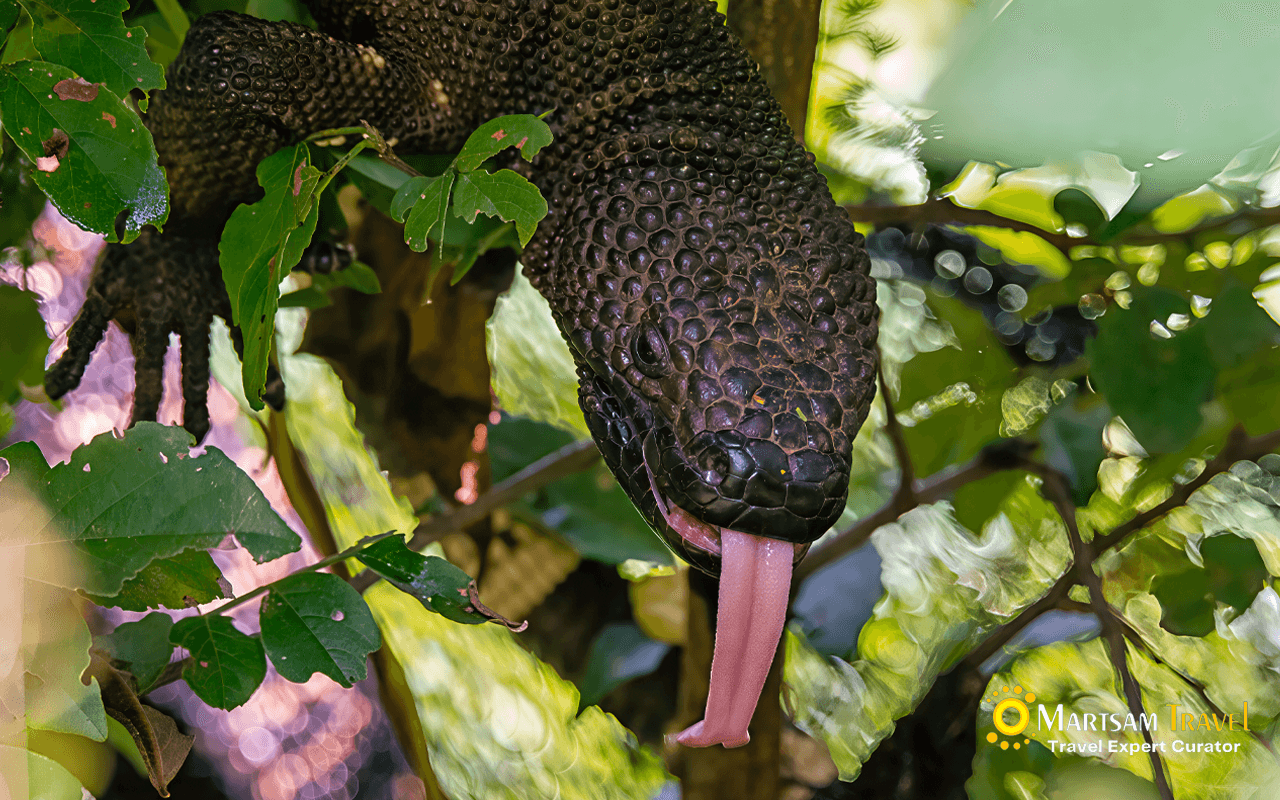
The Guatemalan beaded lizard is slow and enjoys underground retreats. It sometimes climbs trees to hunt bird nests.
Active in the rainy season, it lies dormant in dry months. It exploits arroyos with dense bird nest concentrations to locate prey.
5. Diet
Bird eggs, primarily those of doves and parakeets, constitute the majority of its diet. Guatemalan spiny-tailed iguana eggs are essential.
It is carnivorous, sometimes eating insects or small mammals. What the lizard eats shapes its health and future.
6. Reproduction
Heloderma charlesbogerti oviposits and has a low fecundity. Males become mature at three years, females at four.
Breeding occurs once every 2–3 years. Environmental stress complicates reproduction.
The Motagua Valley Enigma
The Motagua Valley in northeastern Guatemala is the world's sole habitat of the Guatemalan beaded lizard, Heloderma charlesbogerti. This dry valley is more than a sanctuary for a rare lizard — it harbors more than a quarter of Guatemala's reptile and amphibian diversity. The valley's unusual combination of thorn scrub forest, arid conditions, and eco-isolation renders it the most unique habitat in Central America.
A Unique Ecosystem
The Motagua Valley's ecosystem is uniquely marked by its blend of cacti, spiny shrubs, and hardy trees that endure extended periods of drought. Birds, small mammals, and other reptiles share this environment, each following their path to dealing with the valley's harsh climate.
Guatemalan beaded lizards depend on these plants and animals. For instance, they consume bird eggs and nestlings, which are seasonal. The plants give cover during the lizard's extended hibernation.
There, species rely on one another. Birds nesting rouse bugs for the lizards to snack on. If either group suffers, the balance can fall apart. Even the tiniest animal contributes, whether it's by pollinating flowers or by controlling insects.
The valley's intricate biodiversity aids in maintaining ecological balance. Everything is in its place, even Heloderma charlesbogerti.
Climate Pressures
Hotter temperatures and more erratic rain imperil the Motagua Valley's fragile equilibrium. The Guatemalan beaded lizard's existence depends on rain. If the wet season moves, their feeding and nesting fail.
Longer droughts translate into less small game for lizards to consume. With just 200 remaining in the wild, each lost season counts.
With climate change comes more wildfires, destroying both shelter and food. If these trends persist, the valley's endemic species may disappear.
Acting today to mitigate climate threats is essential for the lizard and its neighbors.
Human Impact
Farming and cattle ranching erode the valley's indigenous habitat, shrinking the available habitat for Heloderma charlesbogerti. New roads and settlements slashed the landscape into smaller, isolated fragments.
Illegal wildlife trade adds even more risk. These lizards are highly sought after as exotic pets, and poaching has driven their populations even lower.
Local legend incorrectly stigmatizes the lizard as perilous; thus, they're habitually slaughtered on contact. These fear-driven actions endanger the species further.
Education and outreach can change local attitudes — aiding both humans and animals.
A Species on the Brink
Heloderma charlesbogerti, or Guatemalan beaded lizard, is now Critically Endangered on the IUCN Red List. With fewer than 200 of its kind remaining in the wild, we're a species on the brink. This lizard's dwindling population—combined with its slow reproductive rate and late maturity—makes this an emergency.
Conservation initiatives are essential to prevent this extraordinary reptile from vanishing forever.
Critical Threats
Their primary threats are habitat loss, land cleared for agriculture and grazing, and poaching for the exotic pet industry. Local superstition has people killing these lizards on sight. Wildfires are a threat, wiping out the tropical dry forests and thorn scrub in Motagua Valley, the lizard's sole habitat.
These wildfires not only destroy shelter, but also food, further compounding the struggle to survive. Droughts add risk by desiccating water holes and decimating prey. With every dry season, the lizard's chances of survival decrease.
A contracting gene pool is as well. Fewer people means less genetic diversity, which can render the species less robust when it comes to recovering from illness or adapting.
Conservation Efforts
Enterprising organizations such as NGOs Zootropic and FUNDESGUA, among others, have stepped in to help. Zootropic runs the Heloderma Natural Reserve and cooperates with locals to prevent poaching. FUNDESGUA operates research, habitat restoration, and educational initiatives.
Their crew tracks lizards using telemetry and research ways to increase their populations. Community is key. Local education campaigns combat rumors and educate on why it's essential to save the species.
Research steers all these projects, demonstrating what works and where to focus next.
Captive Breeding
Captive breeding programs largely contribute to rescuing Heloderma charlesbogerti. Zoos in Guatemala and beyond have begun breeding these lizards, assisting in raising numbers and keeping genetic diversity robust. Some captive-bred lizards have been released to protected areas, but wild success is still limited.
Breeding is slow, with females laying eggs just a few years apart. Maintaining a healthy gene pool is a struggle, but it's essential to enduring existence.
The Venom's Hidden Value
Heloderma charlesbogerti, a rare beaded lizard, possesses a venom notable for its intricate blend of proteins and peptides. This venom isn't just a weapon for defense or hunting; it has a more profound biological purpose. Its action on prey is selective, and it's seldom fatal to humans, but it hurts and swells.
The venom's delivery system is distinctive — there are glands in the lower jaw, with ducts running to the teeth. This makes them captivating both to biologists and medical researchers.
A Personal Perspective
Biologists studying Heloderma charlesbogerti, for example, often mention its unique habits, such as lethargy and powerful defense instincts. Other conservationists remember their initial viewing of the lizard hunt, observing that its bite is cautious and deliberate.
These field notes enrich our appreciation and cultivate a sentimental connection with the species.
Medical Potential
Beaded lizard venom has opened new doors for medicine. One such peptide, exendin-4, that is hidden in the venom, has already yielded drugs for type 2 diabetes. This compound replaces hormones that regulate blood sugar.
There's increasing interest in the venom's antimicrobial and potential anti-cancer properties. Recent research examines how they may combat infections or prevent tumor growth.
Herpetologists and medical professionals alike are joining forces to advance this work. It's essential to save Heloderma charlesbogerti. Without it, vital medical progress might grind to a halt.
Ethical Questions
Collecting venom for research raises challenging animal welfare questions. Navigating between the demands of science and the urging of conservation requires rigorous protocols and transparent documentation.
Scientists need best practices to minimize impact and conserve wild populations. Candid conversations are necessary about how to honor nature as we seek new medicines.
Cultural Significance
Heloderma charlesbogerti, the Guatemalan Beaded Lizard, has cultural significance to the communities living in its range. Its ancient lineage, its endangered status, and its remarkable characteristics all elevate it beyond a mere reptile—it is an icon, a legend, an imperative for preservation.
Local Folklore
Legends surrounding this lizard have long depicted it as an enigmatic beast. Myths aside, some community stories consider lizards to be luck or messengers of transformation. While there's no documented evidence of a luck-bringing Guatemalan Beaded Lizard, its bold appearance and infrequent encounters stoke both terror and wonder in the countryside.
These stories influence how humans behave towards the species. Others steer clear of it in deference or dread of its venom, although bites to humans are not lethal. For some, the lizard is a symbol of a vibrant forest.
Folklore can assist conservation efforts by incorporating these tales in outreach. Communities may come to see the lizard as a piece of their heritage. There's something vital about respecting these stories, so preservation work doesn't overlook local cultures.
Modern Perceptions
Today, Heloderma charlesbogerti is considered by many as a living fossil, a relic of a time gone by. It's this status that imbues it with significance — as a monument to nature's resilience, as a cautionary tale about habitat destruction.
Media, school, and community projects disseminate information, highlighting both the lizard's requirements and the threats it faces from humans and land transformation. It's social media that lets rare footage or facts reach a larger audience.
Spreading the word about its longevity and uncommon bite helps de-mystify past concerns. Success stories can change perceptions, turning the lizard into a source of pride, not terror.
Integrating Culture and Conservation
Inviting cultural stories to conservation planning goes a long way in nurturing trust. Leveraging local wisdom and contemporary science in tandem can enhance both comprehension and intervention.
It works best when it's transparent, open, and respectful.
A Future for the Guatemalan beaded lizard
A future for the lizard is intertwined with conservation, habitat stewardship, and community collaboration. It is highly endangered, listed as Endangered on the IUCN Red List, primarily due to habitat loss in Guatemala's Motagua Valley. Direct action—restoring land, safeguarding food, and learning more about the lizard's requirements—is all necessary.
Locally-owned actions and international solidarity can help shift the scales to survival.
Ecotourism's Role
Ecotourism saves Heloderma charlesbogerti by making the lizard a symbol for Guatemala's dry forests. Visitors provide money that can pay for science and stewardship. As in the Motagua Valley, well-run tours have demonstrated that guests do care to glimpse rare wildlife and will pay for guides, stays, and local crafts.
This aids local laborers in making a living without damaging the ground. For instance, a few provide guided hikes to observe indigenous lizards, whereas others educate guests on the region's cacti and dry forest flora. When tourism respects the lizard's space by sticking to trails and controlling the size of groups, it can reduce stress on the environment.
Growth must be slow and careful to avoid affecting rare plants and animals.
Community Involvement
Local folks have a huge role to play in the lizard's fate. Organizations like Zootropic and FUNDESGUA join families and schools, keeping gains near to home. These connections help establish anti-poaching patrols and train guides.
Education shapes how youth see the lizard: not as a threat, but as a key piece of their home. When towns drive their initiatives—such as rehabilitating ground or monitoring nests—they create pride and effect permanent change.
Global Responsibility
To lose Heloderma charlesbogerti is to lose more than just one species. It can sever connections in the broader web of life—all of the Motagua Valley ecosystem counts, from spiny-tailed iguanas to rare trees.
Conservation requires new research and international backing. By supporting CITES regulations, financing initiatives, or disseminating research, individuals globally can contribute to the preservation of this lizard and others.
Conclusion
Heloderma charlesbogerti is no ordinary lizard — the rarity of its story runs deep in both science and local life. Its domicile in the Motagua Valley keeps its world tiny. We research its venom for actual medical benefits, not just for publicity. It's truly threatened, but conservation efforts continue. Locals understand its value–not just as a species, but as family. To maintain this lizard's existence, consistent backing and new concepts count. More eyes, more hands, and wise choices can turn its destiny. Keep the conversation flowing, spread straightforward truths, and support actual action. Change begins with small steps, and every step counts for Heloderma charlesbogerti.
Frequently Asked Questions
What is Heloderma charlesbogerti?
Heloderma charlesbogerti is an exceedingly rare venomous lizard, endemic to the Motagua Valley of Guatemala. It's known as the Guatemalan beaded lizard.
Why is Guatemalan beaded lizardendangered?
It's endangered by habitat loss, the pet trade, and its limited range. Only about 600 are thought to still exist in the wild.
Where does Heloderma charlesbogerti live?
This lizard exists exclusively in the dry forests of Guatemala's Motagua Valley. Its natural habitat is highly restricted.
What is special about its venom?
One day, the venom of Heloderma charlesbogerti might save your life. They research it for potential cures for diabetes and other illnesses.
How does Heloderma charlesbogerti impact local culture?
This lizard is culturally crucial to some indigenous populations. It pops up in local stories and occasionally as a symbol of the region.
What efforts are being made to protect Heloderma charlesbogerti?
Conservation efforts are underway by groups to preserve its habitat, implement breeding programs, and inform locals of the lizard's significance.
Can Heloderma charlesbogerti be kept as a pet?
No, you can't keep Heloderma charlesbogerti as a pet. Safeguarding it in the wild is key to its survival.