Mayan Ruins in Guatemala: Discover Secrets of an Ancient World

Mayan Ruins in Guatemala:

Guatemala's Mayan ruins are some of the most significant archaeological sites in the Americas, showcasing the ingenuity, artistry, and enduring influence of this ancient civilization. From monumental cities like Tikal to secluded gems like Yaxha, each site reveals the splendor and complexity of the Mayan world across thousands of years. This guide provides travelers with essential travel tips, historical context, and practical advice for visiting these iconic sites.


Tikal: The Jewel of the Mayan Civilization

Period: Classic Period, 250-900 AD
Entrance Fee: USD 11 (Q80) for international visitors; additional fees apply for sunrise and sunset tours.
Opening Hours: 6:00 AM - 6:00 PM
Distance:
From Flores: 65 km
From Flores Airport: 62 km
From El Remate: 34 km

Tikal Mayan Ruins In Guatemala Lowlands

Tikal was one of the most influential cities in the Mayan world. Its roots date back to 600 BC, and it reached its zenith during the Classic Period. This massive city covers 576 square kilometers and houses more than 3,000 structures. Among the highlights are Temple I, the Temple of the Great Jaguar, and Temple IV, which offers panoramic views over the rainforest. Tikal's influence extended across Mesoamerica, and its grand plazas, astronomical observatories, and intricate stelae illustrate the artistic and scientific achievements of the Maya.

Travel Tips

Arrive at 6:00 AM to avoid crowds and experience the mystical morning ambiance. Guides are available at the entrance for about $80, approximately for a day tour, providing in-depth knowledge of Tikal's history. Bring plenty of water, sunscreen, snacks, and insect repellent. Comfortable walking shoes are a must, as the site has uneven paths.


Tikal Mayan Ruins in Guatemala


El Mirador: The Cradle of the Mayan Civilization

Period: Preclassic Period, 1000 BC - 150 AD
Entrance Fee: There is no entrance fee
Opening Hours: Open daily for tours and treks.
Distance:
From Flores: 84 km (treks start in Carmelita.)

El Mirador Archaeological Insights

El Mirador, often called the "Cradle of Mayan Civilization," was an influential city during the Preclassic Period, reaching its peak around 300 BC. It's renowned for monumental structures, including the La Danta pyramid, one of the largest pyramids globally, towering at 72 meters. This site showcases the impressive architectural abilities of the Maya long before the Classic Period. El Mirador's influence diminished after 150 AD, but its architectural legacy endures.

Travel Tips

El Mirador is accessible by a multi-day trek from Carmelita, typically five days, and led by local guides. The trek costs $445 per person, including meals, camping, and gear. A helicopter tour costs around $550 per person for a faster but costlier option. This site is suited for adventurous travelers; bring rain gear, insect repellent, and water, and prepare for a physically demanding experience.


Yaxha: Serenity and Stunning Sunset Views

Period: Classic Period, 250-900 AD
Entrance Fee: USD 10 (Q80) for international visitors.
Opening Hours: 8:00 AM - 6:00 PM, with sunset tours available.
Distance:
From Flores: 73 km
From Flores Airport: 67 km
From El Remate: 45 km

Yaxha Guatemalan Mayan Ruins Archaeological Insights

Yaxha was a major ceremonial center strategically positioned between two lakes, providing scenic views and a tranquil atmosphere. With over 500 structures, including nine pyramids and three ball courts, Yaxha offers a comprehensive view of Classic Mayan ceremonial and social life. The site's architecture and strategic positioning highlight its significance in Mayan trade routes and religious practices.

Travel Tips

A sunset tour at Yaxha offers breathtaking views over the lakes, with the main pyramid providing a stunning vantage point. Sunset private tours cost around 0 with a 2-passenger minimum, and a flashlight helps navigate in the dusk. Yaxha tends to be less crowded than Tikal, making it ideal for travelers looking for a quieter, reflective experience.


Quirigua: Towering Stelae and Historical Rivalries

Aguateca Guatemala Mayan site

Period: Classic Period, 600-900 AD
Entrance Fee: USD 11 (Q80) for international visitors.
Opening Hours: 8:00 AM - 4:00 PM
Distance:
From Guatemala City: 209 km
From Flores City: 225 km

Archaeological Insights

Quirigua, occupied since 200 AD, became a prominent political center during the Classic Period, known for its rivalry with the nearby city of Copan. The site is renowned for its massive stelae, the tallest in the Mayan world, which depict rulers and historical events. The Great Plaza houses these monumental structures, showcasing the Mayans' sculpting skills and historical record-keeping.

Travel Tips

Quirigua is a small but historically significant site. Local guides can explain the political rivalry with Copan and interpret the meaning of the stelae. Mid-morning offers ideal lighting for photographing the stelae, capturing their impressive height and intricate details.


Dos Pilas: Fortified Structures and Warfare Insights

Period: Late Classic Period, 600-900 AD
Entrance Fee: There is no entrance fee.
Opening Hours: Open daily; visits typically require a guide.
Access:
You can reach it by boat from Sayaxché, traveling along the river route to Lake Petexbatún.

 Archaeological Insights

Dos Pilas was a significant city-state embroiled in warfare and political intrigue. Its turbulent history was reflected in its extensive fortifications. The site's carvings and hieroglyphic stairways provide insight into Mayan warfare and alliances. The site's defensive walls and paths through dense jungle further emphasize its role as a fortified city during the Late Classic Period.

Travel Tips

Dos Pilas is recommended for adventurous travelers. Trails can be challenging, so sturdy footwear is necessary. Guided tours enhance the experience by providing historical context and navigating dense vegetation. Renting a horse to reach the Mayan site is also possible.


Uaxactun: Ancient Astronomy and Advanced Calendar Systems
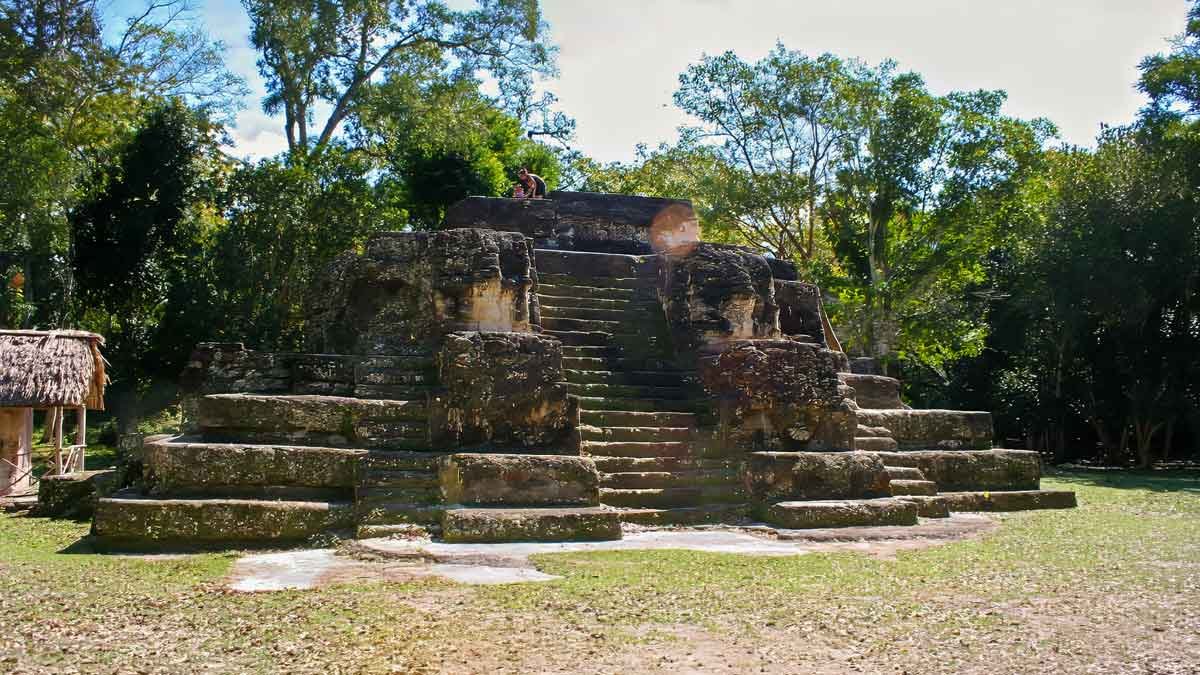
Uaxactun: Mayan Ruins in Guatemala 

Period: Preclassic to Classic Period, 1000 BC - 900 AD
Entrance Fee: USD 7 (Q50) for international visitors.
Opening Hours: 8:00 AM - 5:00 PM
Distance:
From Flores: 87 km
From Flores Airport: 85 km
From El Remate: 56 km

Uaxactun Archaeological Insights

Uaxactun, a notable center for astronomical observations, contributed significantly to Mayan advancements in mathematics and timekeeping. The site includes observatories where the Mayans tracked celestial movements and developed complex calendars, a testament to their scientific ingenuity.

Travel Tips

Guides are available to explain Uaxactun's importance in Mayan astronomy. Early morning is ideal for visiting, as active wildlife enhances the serene ambiance. This less-crowded site offers a more personal experience for visitors interested in the Maya's scientific achievements.


Practical Travel Tips for Exploring Mayan Ruins

  • Accommodations: Flores is the primary lodging hub, offering options from budget hostels to mid-range hotels. El Remate provides lakeside accommodations and is closer to Tikal and Yaxha.
  • What to Bring: Sunscreen, insect repellent, comfortable walking shoes, reusable water bottles, snacks, and a flashlight (for sunrise or sunset tours).
  • Weather Considerations: The dry season (November-April) is ideal for exploration, but the rainy season offers lush landscapes and fewer crowds.

By following this guide, travelers can immerse themselves in Guatemala’s majestic Mayan ruins, marveling at the intricate artistry, architectural feats, and scientific achievements of an ancient civilization that continues to inspire. Whether you’re an adventurous trekker or a cultural enthusiast, these ruins offer an unforgettable glimpse into a remarkable chapter of human history.

 

Where to Stay in Belize: Choose the Region First

Before comparing hotels, decide which part of Belize should receive your time. The location of each stay determines which experiences fit comfortably into the day.

Cayo District for Rainforest, Caves and Maya Sites

Stay in or around San Ignacio when Xunantunich, Caracol, cave experiences and the western rainforest are priorities.

A town hotel provides convenient access to restaurants and local life. A jungle lodge offers more privacy, nature and time within the forest. The right choice depends on whether you want to explore every day or enjoy the property between guided activities.

Cayo also provides the most practical base for a day at Tikal, although the international border adds time and formalities.

Ambergris Caye for Reef Access

Ambergris Caye suits travelers who want several days on the water and convenient access to the Belize Barrier Reef.

San Pedro has a wider choice of restaurants, services and boat operators than Belize’s quieter coastal areas. It works particularly well when snorkeling or diving is central to the trip.

The island is more active than secluded. Travelers looking for greater privacy should consider where on Ambergris Caye they stay, not only the hotel category.

Hopkins or Placencia for the Southern Coast

Hopkins and Placencia offer a different Caribbean finish.

Hopkins provides access to Garifuna cultural experiences, nearby nature reserves and the southern reef. Placencia combines a longer beach setting with restaurants, resorts and excursions toward Monkey River and offshore cayes.

Neither should be added simply as another stop. Choose between them according to the atmosphere, activities and accommodation style you prefer.

Can You Combine the Jungle and Beach?

Yes. A journey can begin in the Cayo District and finish on an island or the southern coast.

Seven days can work when the route remains simple. Nine or ten days provide more time for both regions and reduce the pressure created by transfers.

The best combination is not automatically Cayo and Ambergris Caye. Hopkins or Placencia may suit travelers who prefer the southern coast, while Ambergris Caye provides easier access to several well-known reef areas.

Belize Reef

Three Sample Belize Itinerary Routes

These routes show what each trip length can hold without turning every day into a transfer. They are starting points, not fixed departures.

5 Days: Choose the Interior or the Coast

Interior route

  • Day 1: Arrive and transfer to the Cayo District

  • Day 2: Xunantunich and a local cultural or culinary experience

  • Day 3: Choose Caracol, ATM Cave or another full-day activity

  • Day 4: Nature, a shorter cave experience or time at the lodge

  • Day 5: Return to the airport

Coastal route

  • Day 1: Continue to Ambergris Caye, Hopkins or Placencia

  • Day 2: Private reef or snorkeling excursion

  • Day 3: A second water activity, nature excursion or open day

  • Day 4: Flexible coastal day

  • Day 5: Return to the airport

Five days do not leave much room for recovery if weather disrupts a reef day. Keeping one day flexible can make the trip more enjoyable.

7 Days: Cayo and One Coastal Base

  • Day 1: Arrive and transfer to the Cayo District

  • Day 2: Xunantunich and the surrounding area

  • Day 3: Choose Caracol, ATM Cave or another full-day experience

  • Day 4: Transfer to Ambergris Caye, Hopkins or Placencia

  • Day 5: Reef excursion

  • Day 6: Nature, culture, another water activity or time to rest

  • Day 7: Departure

This route works best when you select one major inland activity and one coastal destination. Adding every well-known site would make the week unnecessarily rushed.

10 Days: Cayo, Maya Sites and the Caribbean

  • Day 1: Arrive and transfer to the Cayo District

  • Day 2: Xunantunich and a cultural or culinary experience

  • Day 3: Caracol or ATM Cave

  • Day 4: A second inland experience, a lodge day or a visit to Tikal

  • Day 5: Transfer to the coast or Ambergris Caye

  • Day 6: Private reef excursion

  • Day 7: Wildlife, culture or another day on the water

  • Day 8: Flexible coastal day

  • Day 9: A final excursion or time without a fixed schedule

  • Day 10: Departure

Ten days provide more choice without requiring every day to remain full. Tikal can replace one inland day, while a broader Guatemala journey requires additional nights.

Tikal National Park

When Should a Belize Itinerary Include Guatemala?

Belize and Guatemala work well together when archaeology and Maya heritage are important to the journey. The amount of Guatemala you include should depend on the time available.

Adding Tikal from Belize

Tikal can be visited while staying in western Belize. However, the day includes an international border crossing and considerable travel time.

This option suits travelers who want to see Tikal but cannot add several nights in Guatemala. It works best when the surrounding Belize itinerary remains focused.

Another option is to stay in Guatemala’s Petén region. This allows more time at Tikal and can also accommodate Yaxha before continuing into Belize.

A Wider Guatemala and Belize Itinerary

A journey including Antigua Guatemala, Lake Atitlán, Tikal, the Cayo District and the Caribbean normally needs about 13 days.

The route can move from Guatemala’s highlands to the Maya lowlands, cross into western Belize and finish beside the reef. This sequence avoids unnecessary backtracking.

With fewer days, choose either Guatemala’s highlands or a longer stay in Belize. Trying to include every region in ten days weakens the time available for both countries.

Frequently Asked Questions About Planning a Belize Itinerary

How Many Days Do You Need in Belize?

Five days suit one main region. Seven days can combine the Cayo District with one coastal base. Nine or ten days allow more time for both without filling every day.

Is Seven Days Enough for Belize?

Yes, when the route remains focused. Choose one inland base and one coastal destination. Limit the number of full-day excursions and avoid adding several regions simply because they appear close on a map.

Can You Visit the Jungle and Beach in One Belize Trip?

Yes. The Cayo District can be combined with Ambergris Caye, Hopkins or Placencia. Seven days can support this route, while nine or ten days provide a more relaxed balance.

Should You Stay on Ambergris Caye, in Hopkins or in Placencia?

Choose Ambergris Caye for convenient reef access and a more active island setting. Hopkins combines the southern coast with Garifuna culture and nearby nature. Placencia offers a longer beach setting, restaurants, resorts and access to southern marine excursions.

Can a Belize Itinerary Include Tikal?

Yes. Tikal can be visited from western Belize, although the day includes an international border crossing. Staying in Guatemala’s Petén region provides more time when Tikal and Yaxha are central to the journey.

What Is the Best Time to Visit Belize?

December through April generally brings the driest weather and the most dependable conditions for reef activities. The wetter months can bring fewer visitors and lower rates, but rain and storm disruption become more likely.

For broader seasonal and destination information, read our Belize destination guide.

Turn Your Belize Itinerary Into a Private Journey

These sample routes provide a realistic starting point. The final sequence depends on your flight times, hotel availability, preferred activities and the pace that suits the people traveling.

Tell us your dates, number of days and whether the rainforest, Maya sites, reef or Caribbean coast matters most. Martsam’s Belize team can then arrange the hotels, private transportation, guides and experiences around your plans.

Explore our Belize vacation packages or contact us to discuss a private itinerary.

Martsam Journal

Martsam Journal

Travel Insights from Guatemala, Belize & the Mundo Maya

Explore thoughtful travel insights from Martsam Travel, including Guatemala and Belize guides, cultural context, family travel advice, nature experiences, and private journey planning.